
Short acrylic nails give you the polished look of an acrylic enhancement without the extra length that can get in the way of typing, cooking, or everyday tasks. The free edge usually extends just past the fingertip, making this a practical choice for first-time acrylic wearers, busy routines, and people with small nail beds. The best results come from choosing a shape and design that suit your available length — find more guides at Polish Haven.
What are short acrylic nails?
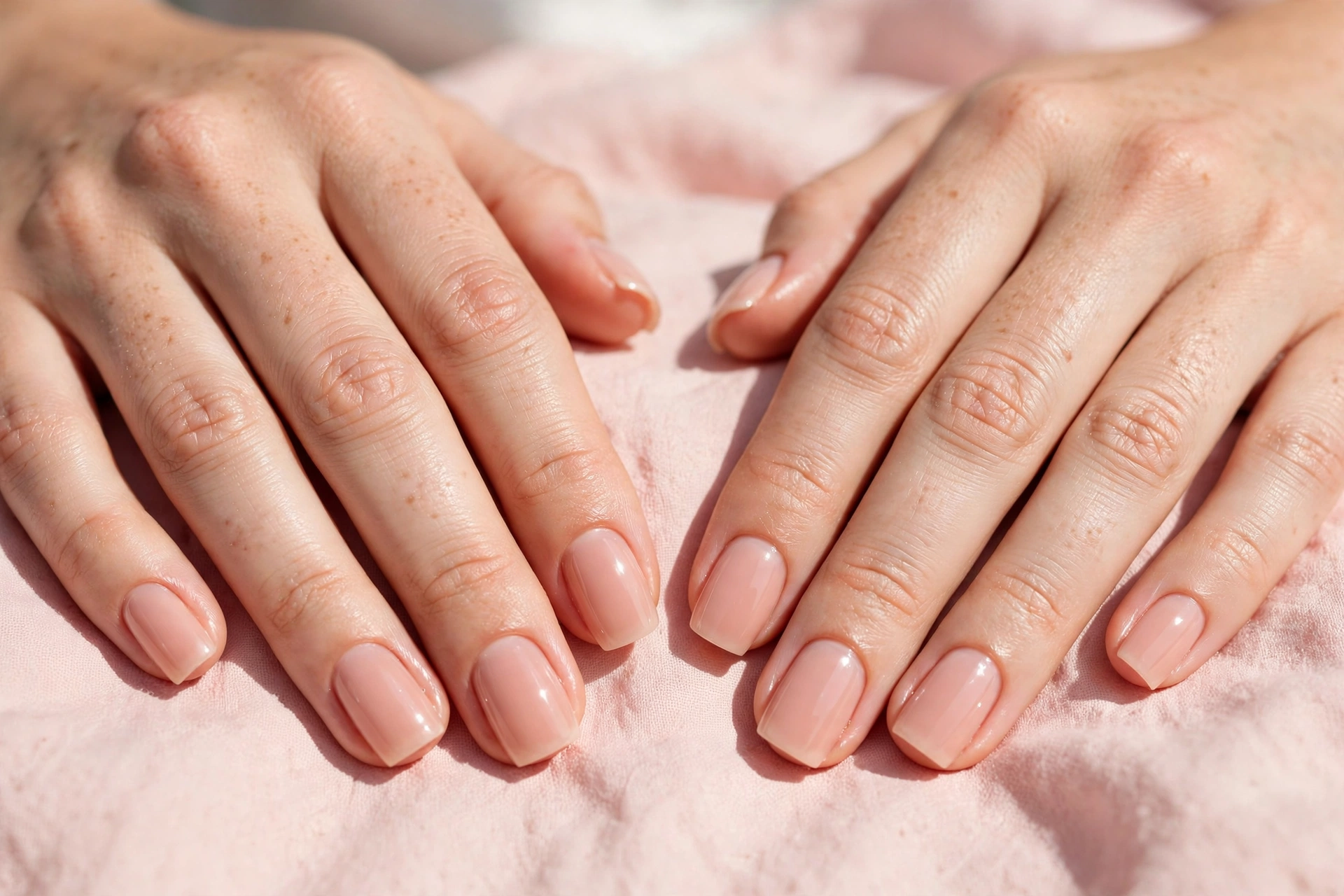
Short acrylic nails are acrylic enhancements kept close to the fingertip rather than extended into a long shape. Acrylic is formed by combining liquid monomer and polymer powder; the mixture hardens in air, so a curing lamp is not required. The finished set can create a consistent free edge and shape even when the natural nails are uneven or short.
This length works well for people who want a tidy manicure that feels manageable at work or during daily activities. It can also be a useful starting point if you have never worn acrylics before and want to adjust to the added thickness.
What about small nail beds? Small nail beds are not a barrier to short acrylics. A nail technician can build the sidewalls and free edge to create a balanced shape that suits the natural nail. Very bitten nails may need enough free edge for reliable adhesion, so an experienced technician should assess them rather than promising that every nail can support an extension.
Short acrylics vs long acrylics: an honest comparison
Short sets often feel easier to manage because there is less length to catch, bend, or knock against objects. That does not make them damage-proof: preparation, application, maintenance, and removal still affect natural-nail health.
| Aspect | Short acrylics | Long acrylics |
|---|---|---|
| Upkeep | Usually easier for daily tasks | More adjustment to everyday movements |
| Infill frequency | Commonly every 2–3 weeks | Also commonly every 2–3 weeks; growth still matters |
| Cost | Often less than long sculpted sets | Can cost more because more product and shaping time may be needed |
| Breakage risk | Shorter length reduces leverage but does not remove risk | More length can create extra leverage if a nail catches or bends |
| Daily life | Practical for typing, household tasks, and active routines | May require more care with gripping and fine movements |
| Design space | Works well with solid colors, small accents, and neat shape details | Allows more room for larger artwork and extended shapes |
If you want a lower-maintenance look, acrylic nails short in length can be a good compromise between a bare natural nail and a more dramatic enhancement. The best choice is the one that fits your routine, not simply the shortest possible set.
The best shapes for short acrylic nails
The most successful short shapes look balanced with the nail’s width and available free edge. Ask your technician to shape each nail to suit its natural proportions rather than forcing every nail into the same silhouette.
- Squoval: A square edge with softened corners. This is a versatile choice when you like a clean, structured finish but want fewer sharp corners to catch on things.
- Round: Follows the natural curve of the fingertip. Short round acrylic nails suit people who prefer a soft, low-key shape and want the edge to look neat as it grows.
- Oval: Slightly elongated at the sides and rounded at the tip. Short oval acrylic nails can create a visually streamlined finish, especially when the free edge is long enough to define the curve.
- Short square: Has a straighter tip and crisp corners. It works particularly well with solid colors and simple designs, provided the corners are not left too sharp for the wearer’s routine.
- Short almond: Possible when there is enough length to taper the sides. If the nails are too short, the point can look stubby instead of almond-shaped.
- Short coffin: Also needs enough length to narrow the sides and create a flatter tip. Coffin acrylic nails short in length can look balanced, but on an extremely short extension the defining shape may disappear.
Stiletto needs more length to form its characteristic point, so readers interested in that silhouette should use the site’s dedicated stiletto guide rather than trying to force it onto a very short set.
For a first appointment, take a reference photo and ask for a shape that fits your actual free edge. A good technician should explain when a requested shape needs more length than your nails can comfortably support.
Short acrylic nail ideas by color & style
Short acrylics do not need elaborate designs to look intentional. Acrylic can give the free edge a uniform shape, which helps simple color choices look tidy across all ten nails.
Nude, pink, and understated looks
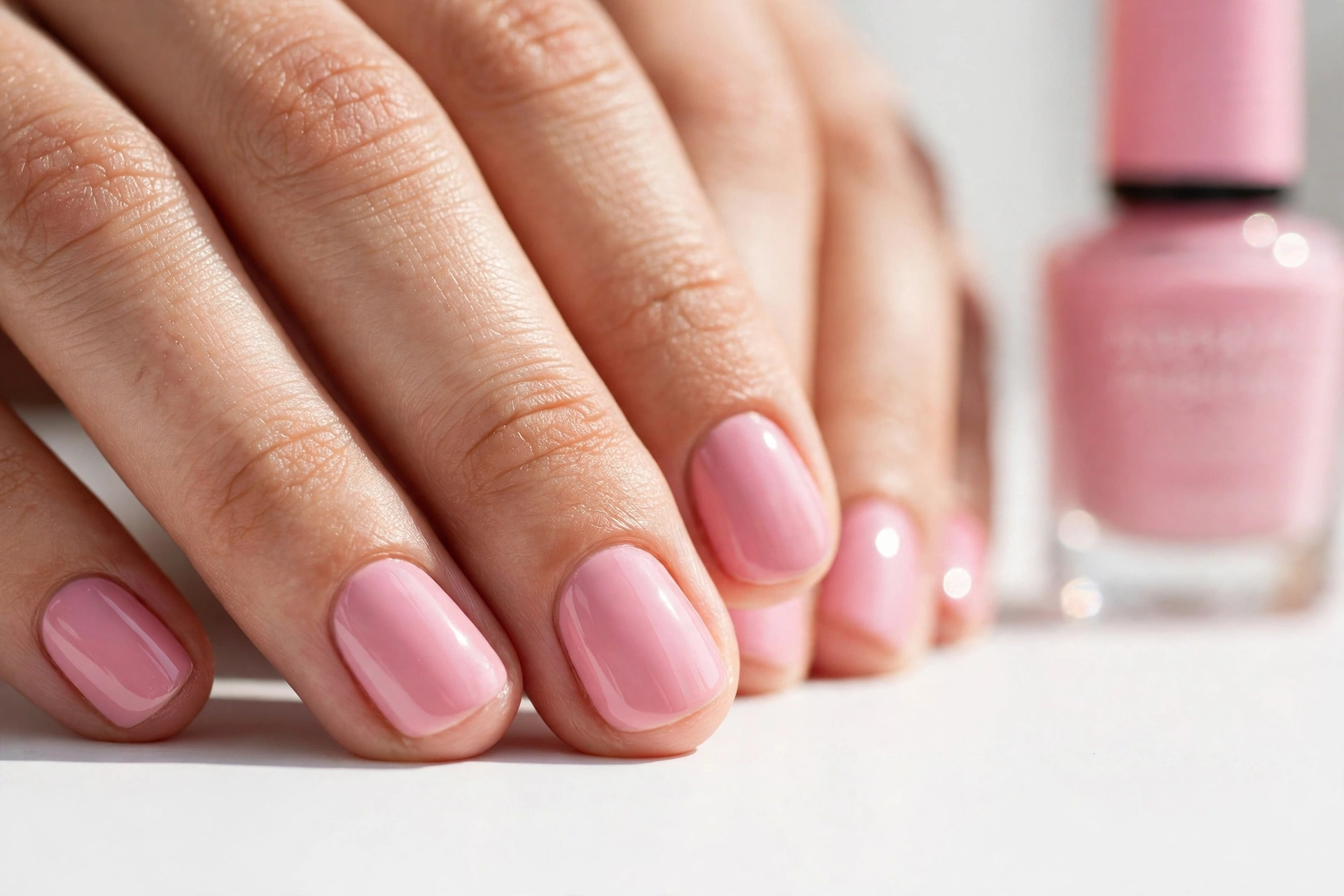
For a natural-looking set, choose a nude close to your preferred undertone, a sheer pink, or a soft beige. These shades pair well with squoval, round, and oval shapes and work for office settings or everyday wear. Classy simple short acrylic nails can also use one muted shade across every nail instead of adding several contrasting details.
Cute short acrylic nails can be as simple as a glossy pink set, a milky neutral, or a soft color with one subtle accent nail. If you prefer a little more color, try short pink acrylic nails with a deeper pink accent or a pale pink base with a small contrasting detail. Keep the design scaled to the nail so the surface does not feel crowded.
White and clean finishes
Short white acrylic nails offer a crisp look that works on square, squoval, and round shapes. A soft white can appear more understated than a stark opaque white, while a solid white set creates a stronger contrast against the skin.
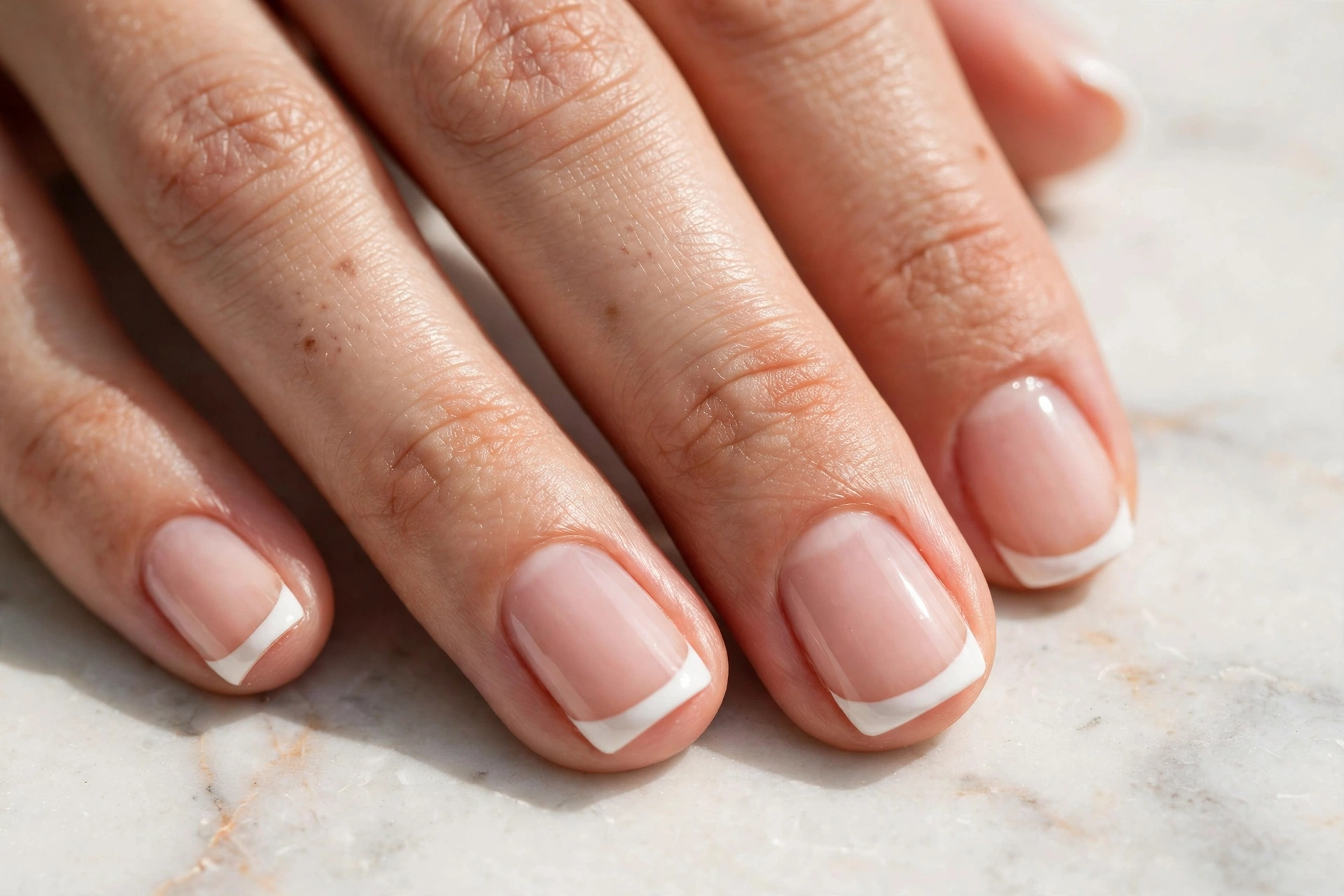
For cute short acrylic nail designs, pair white with pale pink, beige, or a tiny accent rather than filling every nail with several competing elements. French tips are another option, but the site’s dedicated French-tip guide covers that style in more detail.
Black, blue, and purple
Black short acrylic nails can look sleek on a short square or squoval shape. A glossy black finish creates a strong, simple look; a small contrasting accent can soften it without requiring a large design.
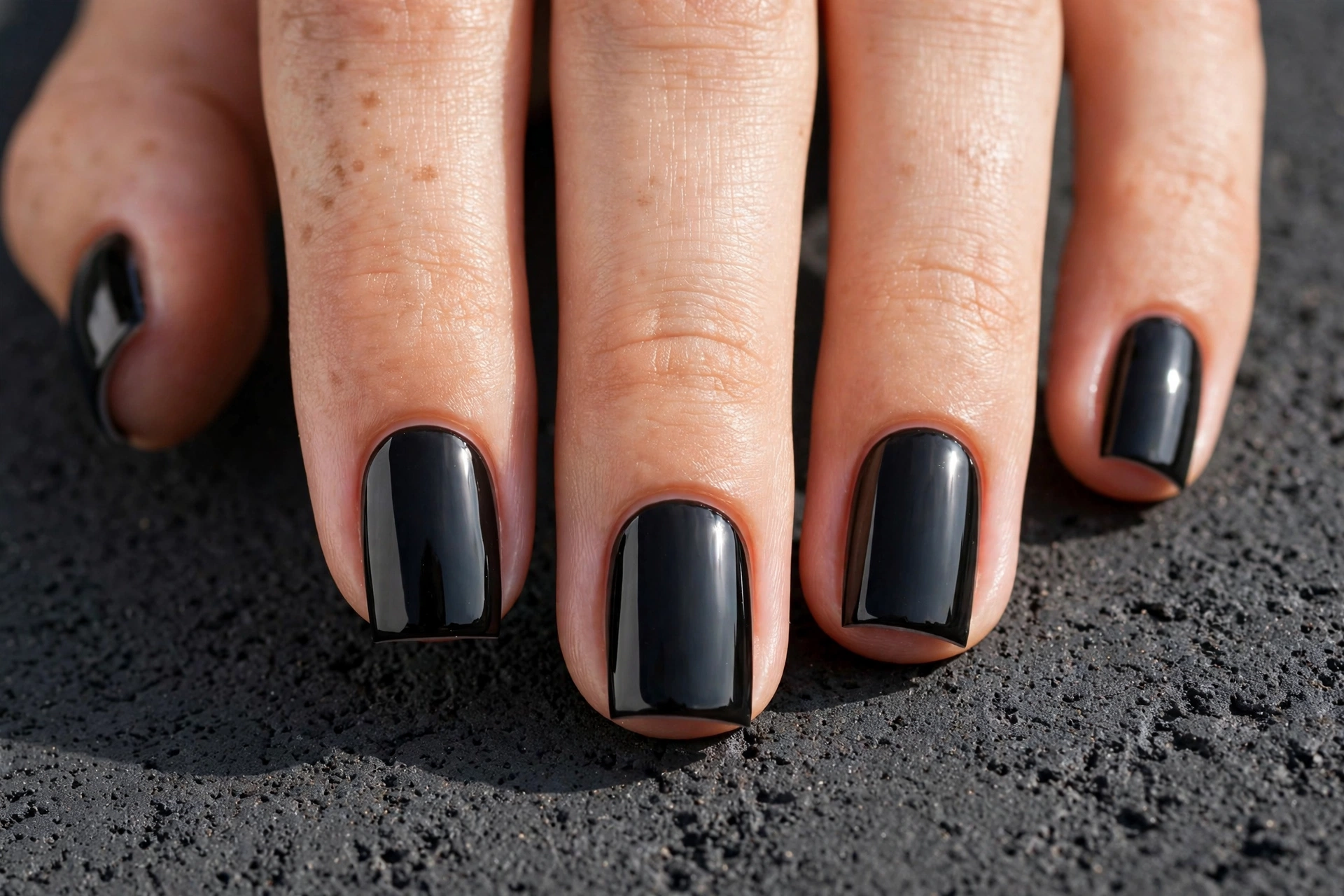
Short blue acrylic nails range from pale blue to deep navy. Lighter blue pairs well with a rounded shape for a relaxed finish, while navy can look sharp on short square nails. Short purple acrylic nails can use lavender for a softer look or a deeper plum shade for more contrast. Keep the color palette focused so the shape remains visible.
Ombre and coordinated sets
A subtle ombré blends two shades, such as pink into white or nude into a soft mauve. On short nails, a gentle transition often reads more clearly than a very detailed gradient. You can also alternate two related shades across the hands for a coordinated set without adding extra decoration.
If you’re saving acrylic nail ideas short for your next appointment, choose images that show a similar nail length and shape to yours. A design photographed on long extensions may look different when scaled down.
Salon vs at-home: getting short acrylics
A salon appointment generally involves assessing the natural nails, preparing the surface, choosing the length and shape, applying the acrylic, and refining the finished set. Short sets may cost less than long sculpted sets because they often require less product and shaping time. Infill appointments typically cost less than a new full set, although prices vary by salon and location.
At-home acrylic kits are available, but they are not necessarily the easiest option for beginners. Controlling the acrylic bead, placing the product neatly, and avoiding skin contact takes practice. Liquid monomer can produce strong fumes, so work in a well-ventilated area and follow the product’s safety instructions. Patch-test new products as directed, and do not allow acrylic products to sit on surrounding skin.
For a first set, a qualified nail technician is usually the more practical choice. You can see how a short shape is built and ask what maintenance it requires before deciding whether home application suits you.
How long do short acrylic nails last?
Short acrylic nails commonly need an infill, also called a rebalance, after about 2–3 weeks. As the natural nail grows, a gap appears near the cuticle and the balance of the enhancement changes. An infill refreshes the grown-out area and restores the structure; it is not simply painting over the gap.
Lifting, cracks, discomfort, or changes in the natural nail may mean you need professional attention sooner. Do not wait for the next scheduled appointment if an enhancement is lifting significantly.
After around two or three infill cycles, many technicians recommend removing the set and assessing whether a fresh application is appropriate. The exact timing depends on nail growth, product condition, and the technician’s assessment. Repeatedly adding product without checking the existing structure can make maintenance less safe.
Care & maintenance
A few consistent habits help keep a short acrylic set looking neat:
- Apply cuticle oil daily to condition the surrounding skin.
- Wear gloves for cleaning and prolonged contact with water or household products.
- Use your fingertips rather than your nails to open packages, scrape labels, or pry objects.
- Keep scheduled infills and ask the technician to assess any cracks or changes in the set.
- Avoid aggressive filing of the natural nail plate. Filing too much can thin it and leave it more vulnerable.
- If lifting appears, do not pick at the gap. Lifting can allow moisture and debris to collect underneath, so contact your nail technician promptly.
Acrylics can still stress or damage natural nails, even when they are short. The American Academy of Dermatology advises taking steps to reduce damage from artificial nails, including avoiding aggressive cuticle work and paying attention to removal and maintenance. Read its guidance on reducing artificial-nail damage.
If a nail becomes painful or you suspect a fungal infection or another nail condition, do not cover it with acrylic. Consult a dermatologist rather than trying to diagnose the problem yourself.
Safe removal
Acrylics should not be peeled, pried, bitten, or ripped off. For soak-off acrylic systems, removal commonly involves acetone and time to soften the product. Follow the system’s instructions or have a qualified technician remove the set. Once the acrylic has softened, it should release gently; forcing it off can remove layers of the natural nail.
Not every enhancement or product is removed in exactly the same way, so identify the product before starting. An e-file can speed up professional removal, but it can also thin the natural nail quickly in inexperienced hands. Do not aggressively file the natural nail to remove stubborn residue.
After removal, moisturize your nails and surrounding skin, and give them a break if they feel thin or tender. Proper nail glue is intended for compatible artificial nail products; household or hardware super glue should never be used on nails.
Mistakes to avoid with short acrylics
- Choosing a shape that needs more length. Very short almond or coffin shapes may lose their definition if the free edge is too short.
- Choosing a length that does not suit your routine. Shorter does not automatically mean practical if the shape or thickness interferes with your daily tasks.
- Skipping infills. Growth changes the position and balance of the enhancement, even when the nails still look acceptable from above.
- Picking at lifting. This can pull away natural nail layers. Ask a technician to assess the problem instead.
- Over-filing the natural nail. Preparation should not aggressively thin the nail plate.
- Ignoring ventilation during DIY application. Monomer fumes and product handling require sensible ventilation and careful adherence to instructions.
Frequently asked questions
How long do short acrylic nails last?
Most short acrylic sets need an infill after around 2–3 weeks as the natural nail grows and creates a gap near the cuticle. Wear varies with application, daily activities, and nail growth. Significant lifting, cracks, or discomfort should be assessed before the next scheduled appointment.
Are short acrylic nails good for small nail beds?
Yes. Small nail beds do not automatically rule out acrylics. A technician can build a short free edge and shape it to suit the natural nail. Very bitten nails may need enough free edge for secure adhesion, so an in-person assessment is helpful.
Which nail shape is best for short acrylic nails?
Squoval, round, oval, and short square are practical options because they work with limited length. Short almond and coffin can also work if enough free edge is available to define the shape. Choose based on your natural nail proportions and everyday routine.
Can you get French tips on short acrylic nails?
Yes. A French tip can be adapted to short acrylics by keeping the tip proportionate to the available nail surface. The result depends on the shape, length, and how much contrast you prefer. For detailed French-tip styles, use a dedicated French-tip guide.
Do short acrylic nails damage your natural nails?
They can. Short length may reduce leverage when a nail catches on something, but it does not prevent damage from aggressive preparation, repeated fills, lifting, or forceful removal. Ask for gentle preparation, maintain the set appropriately, and never peel acrylic off. Seek a dermatologist’s advice if you suspect infection or another nail condition.
Should I get short acrylics at a salon or do them at home?
A salon is usually the better starting point if you have never used acrylic products. Application requires control, clean placement, and appropriate ventilation because liquid monomer produces fumes. Home kits require practice and careful product handling; do not choose DIY simply because the nails are short.
Short acrylic nails can give you a neat, durable-looking shape without the daily adjustments that longer extensions may require. Choose a shape that works at your actual length, keep up with infills, and prioritize gentle application and removal over a design that looks good only in a photo.
Last reviewed: October 2026 — Editorial Team, Polish Haven