
Gel nail glue is an adhesive used to attach artificial nails or tips, but not every gel-style product works the same way. Regular cosmetic nail glue usually bonds without a lamp, while UV-cured gel adhesive needs the specified UV/LED lamp. This guide explains which type suits your needs, how long each may last, and how to apply and remove it more safely.
What is nail glue?
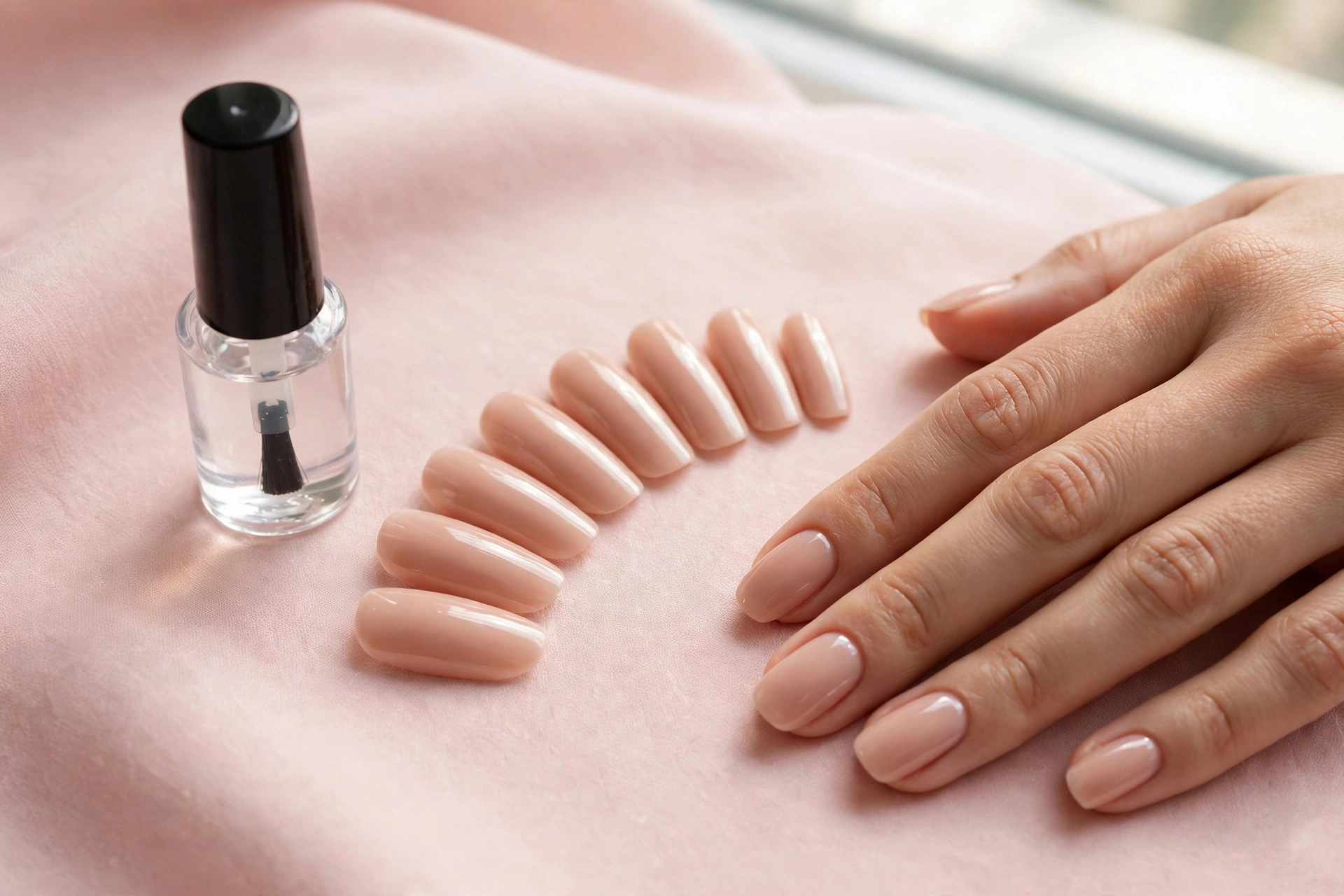
Nail glue is a cosmetic-grade adhesive, usually based on cyanoacrylate, that bonds artificial nails or tips to the natural nail plate. A common ingredient is ethyl cyanoacrylate, which forms a bond when exposed to moisture on the surfaces being joined. The formula, application method and nail preparation all affect the result.
Unlike ordinary nail polish, adhesive is intended to hold two surfaces together rather than provide color or a decorative coating. If you are comparing nail and glue products, check whether the product is designed specifically for attaching artificial nails.
Hardware or household super glue is not nail glue and should never be used on nails. Its formulation and intended use differ from cosmetic nail adhesive, and it can bond skin rapidly.
The main types of nail glue
Choosing between nails glue formats is easier when you understand how each one is dispensed and sets.
Brush-on glue
Brush-on adhesive comes in a small bottle with an integrated brush. It spreads evenly over a nail plate, making it useful for press-ons and tips. A thin application is usually easier to control than a large drop.
Squeeze-tube glue
A squeeze tube dispenses adhesive through a narrow nozzle. It is convenient for targeted application, although too much pressure can release more product than necessary.
Solid jelly glue
Solid jelly glue has a thicker, putty-like texture. Some products are designed for particular press-on systems, and their application and curing requirements vary. Solid jelly glue that does not require curing generally offers shorter wear than conventional liquid adhesive.
UV-cured adhesive
UV-cured adhesive is formulated to harden under a compatible UV/LED lamp. Its instructions specify the curing method and time. It is not interchangeable with ordinary air-setting nail glue simply because both products are used to attach artificial nails.
The best format depends on how you apply your nails, your preferred wear time and the instructions supplied with the product.
Gel nail glue: what it is and when to use it
Gel nail glue describes a gel-like adhesive used to attach artificial nails or full-cover tips. Depending on the formulation, it may need a UV/LED lamp to cure. The product label—not its texture or marketing name—determines the correct setting method.
A typical gel adhesive is thicker than runny liquid glue. This texture can provide more control during positioning, but it does not automatically mean the product creates a stronger bond.
Choose a suitable gel adhesive when:
- You want a thicker product that is easier to position.
- Your artificial tips are designed for use with that adhesive system.
- You have the compatible curing lamp and can follow the manufacturer's directions.
- You are comfortable checking that the product has cured as directed.
The phrase glue gel manicure can be confusing because nail glue and gel polish have different purposes. Nail glue attaches artificial nails; gel polish is a decorative coating that cures under a suitable lamp.
A product described as nail gel glue may therefore be a useful option for certain tip systems, but the label must confirm whether curing is required.
UV nail glue vs regular nail glue: which should you choose?
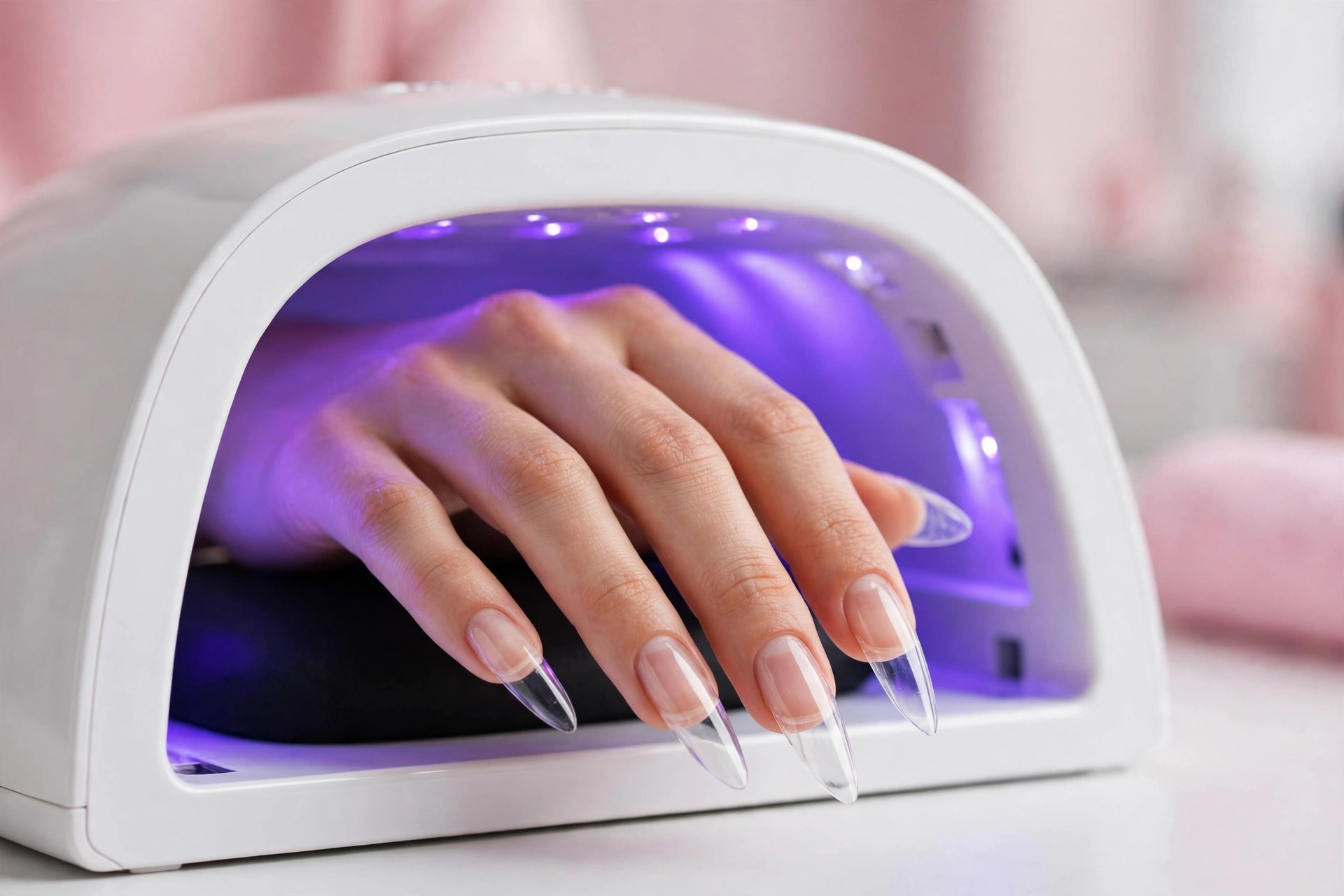
The main difference is how the adhesive sets. Regular cosmetic nail glue bonds without a UV/LED curing step, while UV-cured adhesive requires the specified lamp and curing conditions.
| Feature | Regular nail glue | UV-cured gel adhesive |
|---|---|---|
| Typical hold time | About 7–14 days | About 10–21 days with proper curing |
| Curing | No lamp required | Compatible UV/LED lamp required |
| Removal | Warm water followed by acetone when appropriate | Depends on the formula; follow product instructions |
| Skill level | Generally easier for beginners | Requires correct placement and curing |
| Best for | Routine press-on and tip application | Compatible full-cover tip systems |
| Main limitation | Can bond before repositioning | Incorrect curing can leave adhesive insufficiently set |
These are approximate wear ranges, not guarantees. Natural nail condition, preparation, adhesive compatibility and daily activities all affect retention.
Does UV nail glue need a lamp?
Yes. If the product is specifically a UV-cured adhesive, it needs a compatible lamp and the manufacturer's specified curing time. Many products specify around 60 seconds, but this is not universal. Without the required curing step, the adhesive will not set as intended.
How to apply press-on nails with glue: step by step
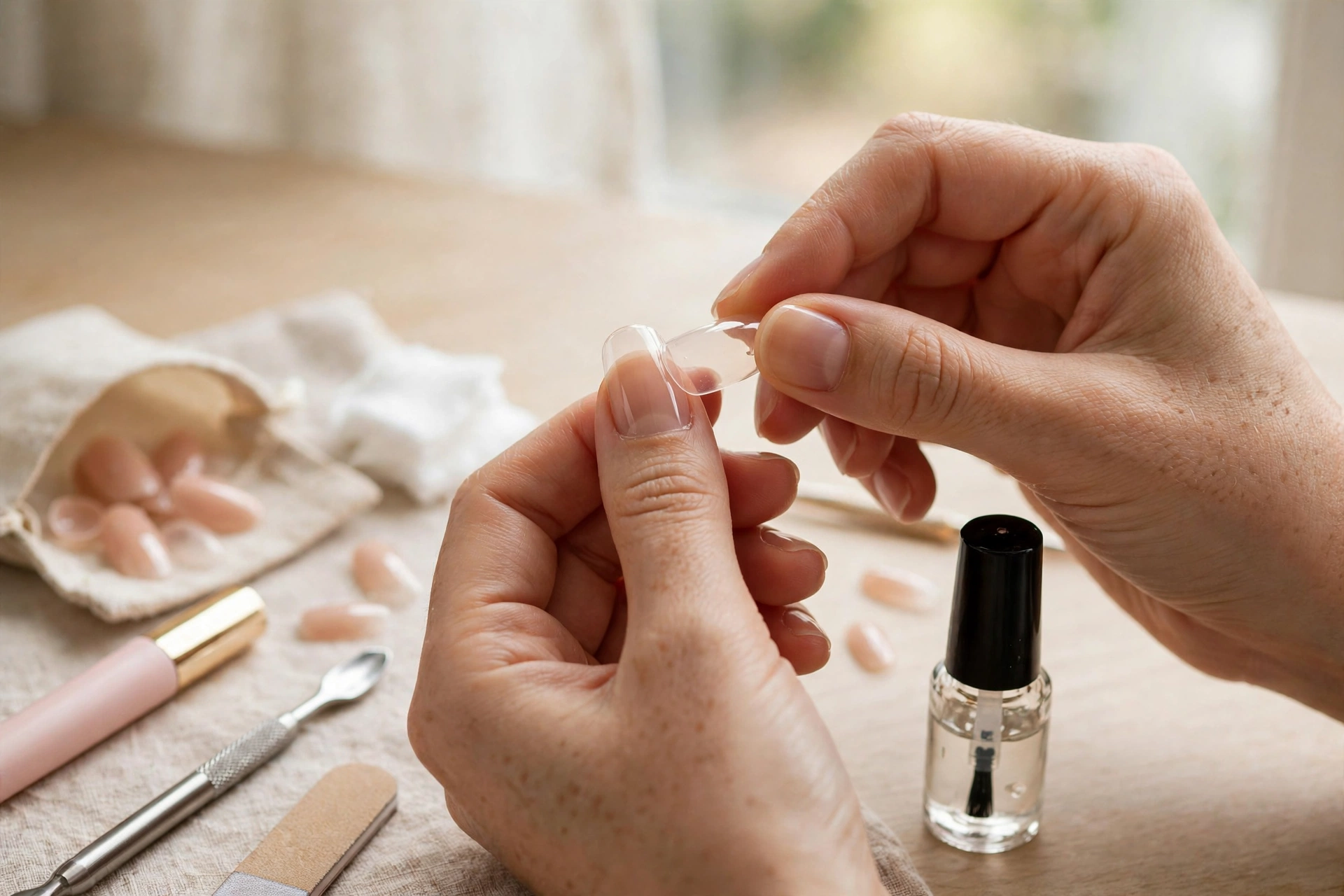
Correct preparation matters more than simply applying extra adhesive. A thin, even layer and a well-fitting artificial nail help create consistent contact.
- Clean your nails. Remove old polish and wash your hands. Dry them completely.
- Prepare the cuticles. Gently push them back without cutting living skin.
- Lightly buff. Remove surface shine if the product instructions recommend it. Do not over-file or thin your natural nails.
- Dehydrate the nail plate. Wipe the surface with alcohol and allow it to dry. Use a separate nail dehydrator only when appropriate for the system.
- Check the fit. Match each press-on to the nail so it sits comfortably without pressing into the surrounding skin.
- Apply a thin layer. Spread a thin, even amount of adhesive on both the natural nail and the press-on, as directed for the product.
- Press firmly. Hold the artificial nail in place for approximately 10–30 seconds, following the adhesive instructions.
- Check the edges. Avoid flooding the cuticles or allowing glue to spill onto the skin.
For UV-cured products, follow the product's specific positioning and curing instructions. Do not assume every tip or adhesive can be cured using the same technique.
The site's press-on nails guide covers the wider routine, including choosing shapes and preparing a complete set.
Nail glue for tips, French tips and overlays
The correct adhesive depends on the type of artificial nail and the manufacturer's intended application.
Nail tips
For nail glue for tips, apply adhesive to the contact area rather than flooding the entire nail or surrounding skin. The tip should fit without excessive pressure. Acrylic nail glue is commonly used for attaching compatible artificial tips, but the adhesive must match the product system.
French-tip press-ons
French tip press-ons are attached in the same general way as other press-ons. When considering french tip glue on nails, prioritize the correct size, a clean contact surface and even pressure. A decorative white tip does not require a different adhesive simply because of its design.
Short nails
Glue on nails short can be a practical option when the artificial nails are correctly sized and do not extend beyond what feels comfortable for everyday activities. Short natural nails still need clean, dry preparation and gentle removal.
Overlays
An overlay is a product applied over the natural nail to add structure or a finish. Not every overlay uses nail glue; many systems use gels or acrylic products designed for that purpose. Follow the product's application instructions instead of substituting ordinary adhesive.
What is the strongest nail glue?
The strongest nail glue is not necessarily the thickest or the one that promises the longest wear. Hold depends on the formula, nail preparation, contact area, fit and whether the product has been used correctly.
Use these approximate wear ranges as a starting point:
- Brush-on or squeeze-tube glue: approximately 7–14 days on well-prepped nails.
- Solid jelly glue without curing: approximately 2–5 days.
- UV-cured gel adhesive: approximately 10–21 days with proper curing and compatible tips.
These ranges describe typical expectations supplied for this guide, not independently tested results for every product. They should not be treated as a promise that a specific manicure will last for a set number of days.
When deciding whats the strongest nail glue for your needs, ask three questions: Is it intended for your artificial nail type? Can you prepare and fit the nail properly? Can you follow the full application and removal instructions?
An extra strong nail glue will not compensate for a poor fit, oily nail surfaces or adhesive that has not set correctly. A high quality nail glue should have clear directions, appropriate cosmetic labeling and packaging that remains usable without contamination.
The goal is secure, comfortable wear—not a bond so difficult to remove that it damages the natural nail.
How to remove nail glue without damaging your nails
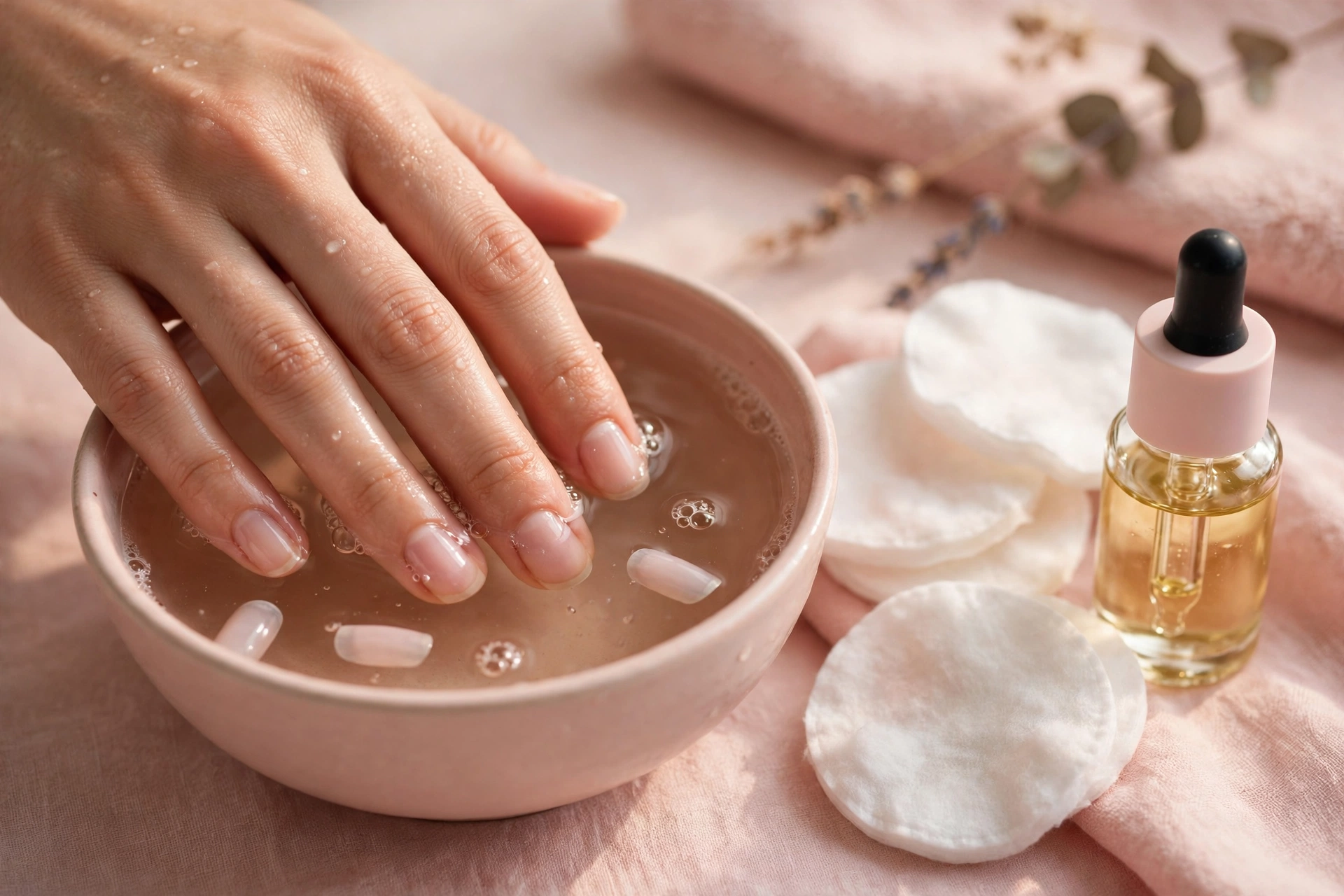
Removing adhesive patiently helps reduce the temptation to peel or pry at artificial nails.
- Soak your fingertips in warm, soapy water to help loosen the edges.
- If the artificial nails remain firmly attached and the product permits acetone removal, soak a cotton pad in acetone.
- Place it against the nail and wrap the fingertip for approximately 10–15 minutes.
- Check whether the adhesive has softened. Gently slide away only material that releases without force.
- Repeat the soak if necessary rather than pulling against resistance.
- Wash your hands and apply cuticle oil afterward.
Never peel off press-ons or pry them loose. Forceful removal can lift layers of the natural nail, cause splitting and leave the surface fragile.
Some gel adhesives and artificial nail systems have different removal requirements. Follow their instructions and seek professional help if the nail will not release safely.
Nail glue substitutes: what actually works
If you do not have nail glue available, the most practical alternative for temporary wear is an adhesive sticky tab made for press-on nails. These tabs generally offer around 1–3 days of wear and are useful for short events or occasional use.
A nail glue substitute should be chosen according to the desired hold, not simply because it is available at home. Sticky tabs are convenient but do not provide the same wear time as liquid nail adhesive.
Homemade mixtures such as flour and water are not reliable nail adhesives and should not be recommended as DIY nail glue. They do not provide a dependable bond and are not a suitable nail-safe solution.
Searches for substitutes for nail glue may also surface ordinary household adhesives. Do not use hardware super glue on nails. If you need a temporary option, choose purpose-made adhesive tabs rather than experimenting with household mixtures.
Nail glue safety: ingredients, fumes and allergies
Nail glue ingredients vary by formula. Conventional nail adhesives commonly use cyanoacrylate, often ethyl cyanoacrylate, while other systems may contain different adhesive or gel-forming ingredients. Read the ingredient declaration, warnings and directions rather than assuming all products have identical chemistry.
Use these precautions:
- Work in a well-ventilated area because fumes may irritate the eyes and nose.
- Avoid getting adhesive on the skin or in the eyes.
- Follow the manufacturer's directions and keep the container securely closed.
- Patch-test new products according to their instructions; a home patch test cannot guarantee that an allergy will not develop.
- Keep adhesives away from children and avoid contact with cotton fabrics, which can react rapidly with some cyanoacrylate adhesives and generate heat.
A 2024 review of adverse effects from at-home nail cosmetics discusses allergic contact dermatitis and other complications associated with nail products.
Stop using the product if you develop redness, itching or swelling. If you experience pain with lifting, persistent irritation or suspected nail infection or fungus, consult a dermatologist rather than trying to diagnose or cover the problem yourself.
How much does nail glue cost (and where to buy it)
Typical US prices vary by formula, size and kit contents:
- Drugstore nail glue: approximately $8.
- Salon-grade brush-on adhesive: approximately $15.
- Solid gel glue kits: approximately $20.
These are approximate price ranges, not live quotes. A salon-style bottle may offer a more controlled applicator, while a kit may include tips or other accessories that affect the price.
You can generally look for cosmetic nail adhesive at drugstores, beauty supply shops or reputable online retailers. Search for products explicitly labeled for artificial nails, check the instructions and ingredient information, and avoid choosing solely by claims of maximum strength.
Frequently asked questions
Can you use nail glue on natural nails?
Yes. Cosmetic nail glue can be applied to natural nail plates when attaching compatible artificial nails or tips. Keep the adhesive off the surrounding skin, prepare the nail gently and follow the label. Do not apply artificial nails over nails that are damaged, painful or showing possible infection.
How long does nail glue last?
Regular brush-on or squeeze-tube nail glue may hold press-ons for around 7–14 days on well-prepped nails. Solid jelly glue without curing may last about 2–5 days, while compatible UV-cured adhesive may last around 10–21 days when properly cured. Actual wear depends on fit, preparation and everyday activity.
Is nail glue the same as super glue?
No. Nail glue is a cosmetic adhesive formulated and labeled for nail use, commonly based on cyanoacrylate. Hardware super glue is intended for other materials and must not be used on nails as a substitute. Choose an adhesive specifically intended for artificial nails.
Can nail glue damage your nails?
Yes, improper application or forceful removal can contribute to peeling, splitting and surface damage. Allergic reactions can also occur. Avoid prying off artificial nails, do not over-file natural nails, and seek dermatological advice if you notice persistent redness, itching, swelling or pain.
Does UV nail glue need a lamp?
Yes, when the product is specifically formulated to cure under UV/LED light. Use a compatible lamp and the exact curing instructions on the label. A typical 60-second instruction is product-specific, not a universal rule. Adhesive that has not been properly cured should not be assumed safe or ready to wear.
What is the best nail glue substitute?
Purpose-made sticky tabs are the best option for temporary press-on wear when you do not want to use liquid adhesive. They typically last around 1–3 days. Homemade flour-and-water mixtures do not provide a reliable bond, and hardware super glue is not a safe alternative for nails.
Last reviewed: October 2026 — Editorial Team, Polish Haven
[…] nails are pre-shaped artificial nails you apply at home with nail glue or self-adhesive tabs, giving you a polished, salon-style look without a salon appointment. They […]