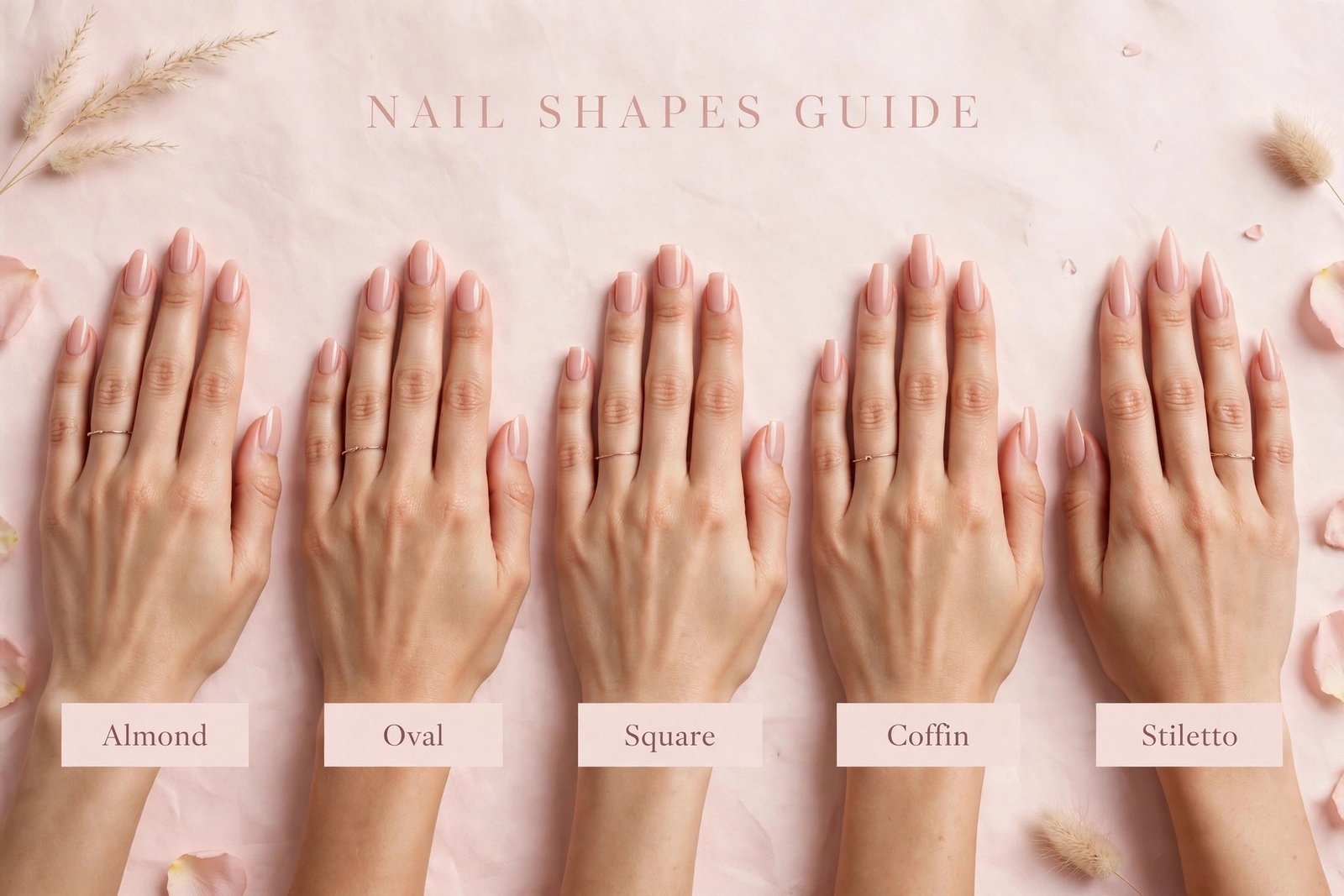

Choosing between different nail shapes can change the look of your hands, the appearance of your fingers, and how comfortably you manage everyday tasks. This guide to nail shapes puts every major shape and length side by side, helping you compare the look, fit, and practical benefits before choosing your next manicure — from the team at Polish Haven.
Updated for October 2026, this guide covers almond, oval, round, square, squoval, coffin, ballerina, and stiletto nails, along with short, medium, long, and extra-long lengths. Whether you prefer a natural manicure or a dramatic set of extensions, understanding the differences makes it easier to choose a nail shape that suits your hands and lifestyle.
There is no single shape that works best for everyone. Some shapes create a longer-looking silhouette, some are easier to maintain on natural nails, and others need additional support to hold their form. The aim is to help you find a shape that looks good and works for your daily routine.
1. What are nail shapes?
Nail shapes describe the outline of the free edge and sides of your nails. The shape can be natural and rounded, straight and square, tapered and pointed, or a combination of these features.
The most familiar types of nail shapes include almond, oval, round, square, squoval, coffin, ballerina, and stiletto. Each has a different appearance, and some are better suited to short natural nails while others need extensions to achieve their full shape.
Nail shapes and lengths are related, but they are not the same thing. Shape describes the outline; length describes how far the nail extends beyond your fingertip. For example, you can wear short round nails, medium oval nails, or long almond nails.
This guide is organized to make those differences easy to compare. Each section introduces a shape or length, explains who might prefer it, and highlights the practical considerations before you commit to a manicure.
Here is a quick overview:
Almond: Tapered sides and a soft point for an elongated appearance.
Oval: Curved sides and a rounded tip for a classic, natural look.
Round: A short, rounded outline suited to practical everyday wear.
Square: Straight sides and a flat tip with defined corners.
Squoval: A square outline with softened corners.
Coffin or ballerina: Tapered sides and a flat tip, usually requiring substantial length.
Stiletto: A dramatic, sharply pointed tip that needs careful maintenance.
Your natural nail length, width, curvature, and preferred maintenance routine all influence which shape will work best.
2. Why your nail shape matters
The shape of your nails affects more than the finished manicure. It influences how your fingers appear, how much of the natural nail you need to maintain, and how easily your nails handle daily activities.
Shape changes the visual effect
Almond and oval nails create tapered or curved outlines that can make fingers appear longer. Square nails emphasize the width of the nail plate and create a more defined appearance, while round nails follow the natural fingertip for a simple, understated result.
These are visual effects rather than strict rules. Your natural nail proportions, hand shape, and chosen length all influence the final look.
Shape affects everyday comfort
Short round and squoval nails are generally practical for typing, cooking, cleaning, and other hands-on activities. Their shorter length and softened edges leave less free edge to catch on clothing or objects.
Long coffin and stiletto nails create a more dramatic silhouette but require greater care. Typing, handling contact lenses, playing sports, and opening packaging may become more difficult as length increases.
Shape affects strength and maintenance
A rounded or squoval natural nail is often easier to maintain than a very long pointed shape. Sharp corners can snag, while long, tapered tips may be more vulnerable to breakage.
Extensions can help create shapes that natural nails cannot easily support at the desired length. However, added length also brings maintenance and removal considerations.
What is the best nail shape?
The best nail shape is the one that balances your preferred appearance with the length and maintenance you can manage. Almond and oval shapes are popular choices for an elongated look, while short round and squoval shapes are practical options for everyday wear.
Your nail shape should fit your lifestyle, not the other way around. A simple, well-maintained shape can look just as polished as a long, intricate manicure.
3. Almond nails
Almond nails have tapered sides that meet at a soft, rounded point, creating an outline similar to an almond. They are a popular choice for people who want a more elongated appearance without the sharp tip of a stiletto manicure.
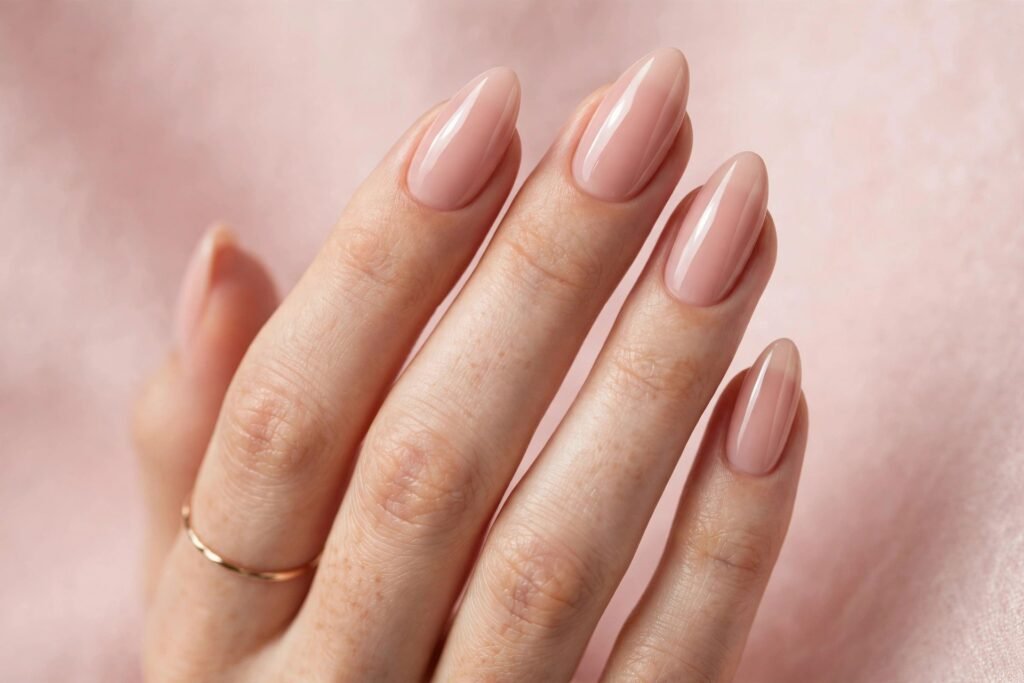
This shape can be particularly flattering on short-looking fingers or wider nail beds because the tapered sides draw the eye toward the center of the nail. It can also suit naturally narrow nails, although the final result depends on the starting proportions.
Almond nails need some free-edge length to create a recognizable taper. Very short natural nails may not have enough length for the sides to narrow comfortably, so a rounded or oval shape may be more practical until the nails grow.
A few examples illustrate the range:
Almond French: A neutral base with a white or colored curved tip.
Almond chrome: A reflective finish that emphasizes the tapered outline.
Nude almond: A sheer pink, beige, or milky nude shade for a restrained manicure.
Almond nails can work with natural nails when sufficient length is available. For a longer or more pronounced taper, gel extensions or acrylic enhancements can help create the desired outline, although the result still depends on correct application and maintenance.
If you are drawn to tapered nails but want a softer look than stiletto, almond is a useful shape to consider. The dedicated almond nail guide explores its variations in more detail.
4. Oval & round nails
Oval and round nails are two of the most natural-looking nail shapes. Both use curved edges, but they differ in how much length and taper they require.
Oval nails
Oval nails follow a smooth, curved outline, with the sides narrowing gently toward a rounded tip. The result is softer than square nails and less pointed than almond nails.
Oval nails work on short to medium lengths, provided there is enough free edge to create the curve. They can suit a wide range of nail beds and are useful if you want a classic manicure that does not look overly angular.
Simple examples include a sheer pink oval manicure, a soft white French tip, or a single-color glossy finish.
Round nails
Round nails follow the natural curve of the fingertip, with a short, rounded free edge. They are often the most practical short shape because there are no sharp corners to catch as easily on fabric or everyday objects.
They work particularly well for people who keep their natural nails short, type frequently, or prefer minimal upkeep. A solid red manicure, glossy nude polish, or a simple pastel color can look neat on round nails without requiring extra length.
Which should you choose?
Choose oval if you want a softly elongated look and have enough nail length to form the curve. Choose round if practicality and a short, natural outline matter most.
Both shapes can be maintained with a file at home, provided you work gently and avoid filing the skin around the nail.
For a closer look at the differences between these two curved shapes, the dedicated oval nail guide covers their proportions and styling options.
5. Square & squoval nails
Square nails have straight sides and a flat tip, with corners that remain clearly defined. Their geometric outline creates a bold, modern appearance and provides a broad surface for color and simple nail art.
Squoval nails combine a square outline with softened, rounded corners. They retain the flatter tip of a square manicure while reducing the sharpness of its edges.
Square nails
Square nails can suit short, medium, or longer lengths, depending on the proportions of the natural nail. The flat tip gives French manicures a particularly clear, defined edge.
Examples include a classic white square French manicure, a solid glossy red set, or matte black square nails. The shape can look especially striking with one uniform color because the straight edges create a clear silhouette.
The main practical drawback is that square corners can snag on fabric or objects. On some natural nails, those corners may also chip or break more easily if they extend too far beyond the fingertip.
Squoval nails
Squoval is a useful alternative if you like the appearance of square nails but prefer a softer edge. Gently rounding the corners reduces sharp points while preserving the straight-across tip.
It works well on shorter natural nails and medium lengths. A neutral squoval manicure, muted pink polish, or a soft French tip can all suit this outline.
Practical tip: File both sides evenly and avoid narrowing the nail too much at the corners. A balanced outline helps preserve the intended shape without leaving fragile edges.
If you are deciding between a crisp square tip and a softer everyday outline, the dedicated square nail guide covers both square and squoval options in greater detail.
6. Coffin & ballerina nails
Coffin and ballerina nails have tapered sides that end in a flat tip. Their outline resembles a coffin or the toe of a ballet slipper, which is why the two names are commonly used for the same general shape.
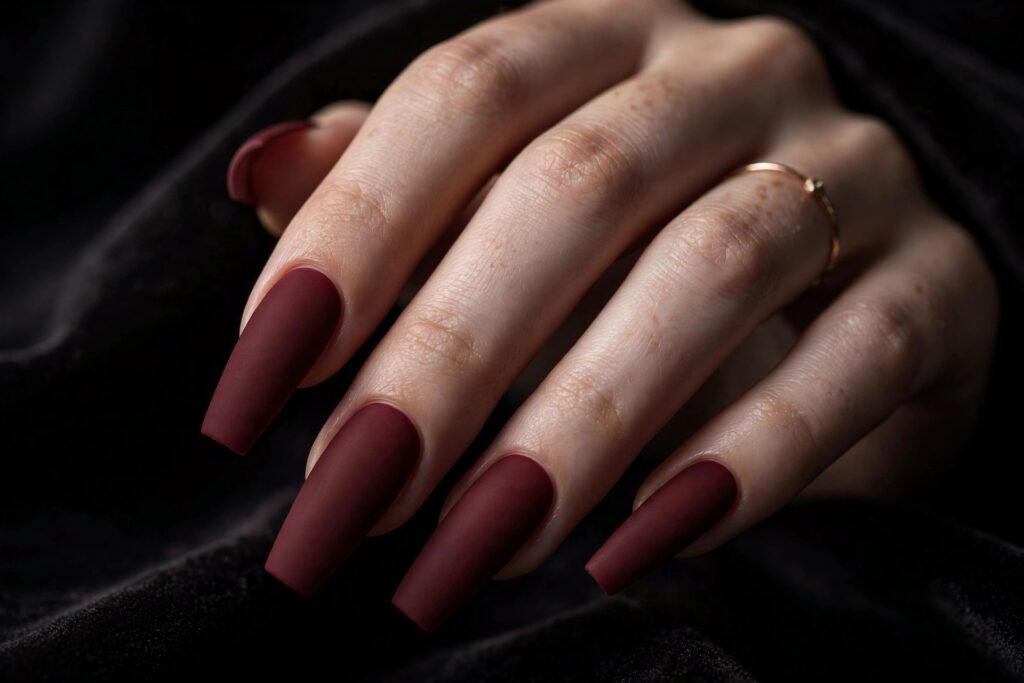
Unlike round, oval, or squoval nails, coffin nails need substantial length to show the taper clearly. On very short nails, there is not enough free edge to form the characteristic silhouette, so the result may look more square than coffin-shaped.
This shape is often created with extensions because maintaining a long, tapered outline on natural nails can be difficult.
A few examples include:
Nude coffin: A glossy beige or milky pink finish.
Coffin French: A defined French tip across the flat edge.
Matte burgundy coffin: A deep seasonal color with a low-shine finish.
Coffin nails are generally more structurally robust at the tip than stiletto nails of comparable length because the end is flat rather than reduced to a sharp point. However, they are not break-proof. Long extensions can still catch, bend, or place stress on the natural nail.
Acrylic enhancements are commonly used for this shape, while compatible gel extension systems can also create it. The best option depends on the desired length, product system, and maintenance routine.
If you like a tapered silhouette with a flat edge, the dedicated coffin nail guide explores shorter and longer versions of the shape.
7. Stiletto & pointed nails
Stiletto nails have sharply tapered sides that meet at a pronounced point. They create one of the most dramatic nail silhouettes and are often associated with statement manicures and longer extensions.
Unlike almond nails, which finish in a soft point, stiletto nails narrow much more sharply toward the tip. This difference changes both the appearance and the practical demands of the manicure.
Three examples show how the shape can be styled without requiring an elaborate design:
Glossy black stiletto: A uniform dark finish emphasizes the pointed outline.
Nude pointed nails: A neutral shade keeps attention on the silhouette.
Metallic accent stiletto: A chrome or metallic detail adds contrast to the pointed shape.
The main consideration is structural strength. The narrow point has less material at its end than a flat or rounded tip, making long stiletto nails more vulnerable to breakage. They can be inconvenient for typing-heavy work, sports, and other activities where your hands are frequently in use.
Stiletto nails are commonly created with acrylic extensions, although other compatible extension systems can produce a similar shape. Maintaining them may require regular professional appointments and careful handling.
If you want a pointed manicure, consider whether you can comfortably manage the length before choosing the sharpest version. The dedicated stiletto nail guide focuses on pointed shapes and their practical trade-offs.
8. Short nails
Short nails are practical, relatively low-maintenance, and suitable for people who prefer to keep their natural nails close to the fingertips. They are also a useful starting point if you are learning to file your nails into a consistent shape at home.
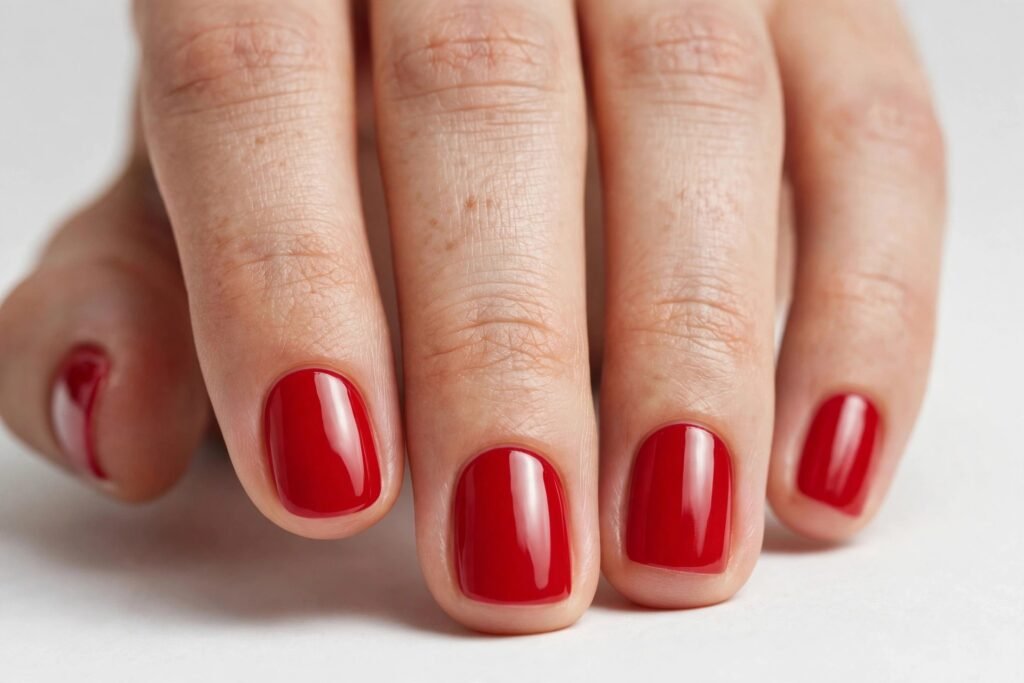
Short length works with several outlines, but round, oval, and squoval shapes are particularly easy to maintain. Their curved or softened edges reduce the number of sharp corners that can snag during everyday activities.
Short nails can also show color beautifully. You do not need extra length to wear a recognizable seasonal shade or a polished, coordinated manicure.
Consider these simple examples:
Short glossy red: A classic color on a neat, rounded outline.
Short pink nails: A sheer pink or milky finish for an understated look.
Short purple nails: Lavender or deeper purple polish adds color without requiring nail art.
Short French tips: A thin white or pastel line creates definition on a natural base.
The best option depends on your nail width, fingertip proportions, and personal style. A short oval shape may create a softer appearance, while short squoval nails provide a flatter tip.
Short nails generally carry less leverage than long extensions, although natural nails can still split or break. Keep the free edge smooth and avoid repeatedly filing the nail plate itself.
If you want a manicure that is easy to maintain without extensions, short nails are a strong starting point. The dedicated short nail design guide explores simple options suited to shorter lengths.
9. Medium-length nails
Medium-length nails offer a practical middle ground between short natural nails and long statement extensions. They provide enough free edge to show a distinct outline while remaining manageable for many everyday activities.
This length is sometimes described as a sport length because it balances appearance and function. The term is informal, though, and there is no universal measurement that defines medium length across all hands or nail systems.
Medium length can accommodate several recognizable shapes:
Medium almond: A soft taper without the extreme length of a dramatic extension.
Medium oval: A curved outline that works with a natural-looking manicure.
Medium square: A flat tip that creates a more defined, geometric appearance.
Medium squoval: A square-inspired outline with softened corners for everyday wear.
This length is often a sensible starting point if you want to experiment with shape without immediately committing to very long nails.
The practical result depends on your work and hobbies. Medium nails may still require adjustments when typing, exercising, or handling small objects, but they generally demand less accommodation than extra-long extensions.
If you are growing your natural nails, file gradually and keep both sides balanced rather than trying to achieve a dramatic shape before there is enough free edge.
For a closer comparison of proportions and practical lengths, the dedicated medium nails guide explores options within this middle ground.
10. Long & extra-long nails
Long and extra-long nails create a statement look, particularly when paired with almond, coffin, square, or stiletto shapes. Additional length makes the outline more visible and provides more room for decorative finishes.
However, the longer the free edge, the more leverage can be placed on the natural nail when a tip catches or bends. Very long natural nails may be difficult to maintain, especially if your nails tend to split or you use your hands heavily throughout the day.
For that reason, long statement shapes are often created with acrylic enhancements or a compatible builder-gel system. These products can support the intended length when correctly applied, but they do not eliminate the risk of breakage or damage.
A few examples include:
Long almond: A tapered outline with a softly pointed tip.
Long square: A flat edge that creates a bold, geometric silhouette.
Extra-long coffin: Tapered sides and a broad, flat tip.
Long stiletto: A sharp point for a dramatic appearance.
The lifestyle cost is worth considering before choosing extra length. Typing, inserting contact lenses, playing sports, and opening containers may become more difficult. You may also need more frequent maintenance and greater care during removal.
If you want a longer shape for a special event, pre-shaped press-on sets can provide a temporary option without requiring you to grow your natural nails to that length. Choose a size that fits comfortably and use the manufacturer’s intended adhesive.
The dedicated long natural nails guide explores length, maintenance, and the considerations involved in keeping longer nails.
11. How to choose your nail shape: hand shape, lifestyle & style
Choosing a nail shape becomes easier when you consider three things together: the proportions of your hands, your everyday activities, and the appearance you prefer. No shape is reserved for a particular hand type, so use these suggestions as starting points rather than strict rules.
Choose according to your nail beds and fingers
If your nail beds are wide: Almond or oval nails can create a more tapered visual outline. If your natural nails are short, round or squoval may be easier to maintain while you grow enough length for a more pronounced taper.
If your fingers are short: Almond and oval shapes can create an elongated appearance because their sides lead the eye toward a narrower or curved tip. Medium length may make the shape more visible, but you do not need long extensions to create a balanced look.
If your fingers are long or your nail beds are narrow: Square, squoval, oval, and almond can all work well. Choose based on whether you prefer defined corners, soft curves, or a tapered outline.
If your nails are naturally short: Round and squoval shapes are practical choices because they do not require much free edge. Oval can also work when there is enough length to form a smooth curve.
Choose according to your lifestyle
Your daily routine can be more important than your hand proportions.
Typing and office work: Short round or squoval nails are often comfortable and easy to manage.
Sports or hands-on work: Keep nails short enough that they do not interfere with your activities, and follow any applicable workplace or sport-safety requirements.
Frequent household tasks: Rounded edges and modest lengths may be easier to maintain.
Special occasions: Coffin, stiletto, and longer almond shapes can create a more dramatic look when the length suits your plans.
If you use contact lenses, consider whether you can handle them comfortably with your chosen length. Long, sharp tips can make lens insertion and removal more awkward.
Choose according to your preferred style
A natural manicure might suit round or oval nails with a sheer polish. A defined French manicure can emphasize square or almond shapes, while metallic finishes can draw attention to the outline of coffin or stiletto extensions.
You can also change the shape without changing the color. A familiar nude polish looks different on a square nail than on an almond nail, even though the shade remains the same.
Can you change your nail shape at home?
Yes. Filing a new shape into your natural nails is usually straightforward when you work gradually and use a suitable nail file.
Remove existing polish if needed so you can see the natural outline.
Decide on the target shape before filing.
File the free edge and side edges gently, checking both hands for balance.
Stop if the nail becomes tender or you reach the skin.
Smooth rough edges without aggressively buffing the nail plate.
Never file living skin or use filing to force a nail into a shape that does not fit its current length. Going from short natural nails to a substantially longer coffin or stiletto shape generally requires extensions.
If you want an immediate change in outline, press-on nails come pre-shaped in a range of styles. They are a temporary option, but the tips still need to fit your natural nails properly.
Gel nails are one route for creating supported extensions, while acrylic nails are another. Both require suitable application and careful removal; neither makes very long nails immune to breakage.
What should you budget for?
Prices vary by salon, location, nail length, and product, but broad US ranges can help you compare the options:
Basic salon manicure with shaping: Approximately $30–$50.
Acrylic full set with shaped extensions: Approximately $50–$80 or more.
Pre-shaped press-on sets: Approximately $8–$15.
These are estimates, not fixed prices. Ask whether shaping, polish, extensions, nail art, and removal are included before agreeing to a salon service.
Whatever shape you choose, avoid harsh preparation and forceful removal. Patch-test new adhesives and other nail products according to their instructions. Never use hardware or craft super glue on your nails. If an artificial nail needs removing, follow the product’s removal directions and soak off conventional press-ons rather than ripping or prying them away.
If you suspect a nail fungus or infection, consult a dermatologist rather than attempting to diagnose it yourself.
12. Frequently asked questions
Which nail shape makes fingers look longer?
Almond and oval shapes can make fingers appear longer because their tapered or curved outlines draw attention along the length of the nail. Medium length can make the effect more noticeable, but the best choice also depends on your natural nail proportions and personal preference.
What is the best nail shape for short fingers?
Almond and oval nails are common choices for creating an elongated appearance on shorter fingers. If your natural nails are too short for a clear almond shape, a short oval or round shape can look balanced while you grow them.
What is the best shape for wide nail beds?
Almond and oval shapes can create a slimmer visual outline because their sides taper or curve toward the tip. However, a comfortable fit matters more than appearance alone. If your nails are short, a round or squoval shape may be easier to maintain.
Which nail shape lasts the longest?
There is no single shape that guarantees the longest wear. Short round and squoval nails are often practical because they have less free edge and fewer sharp corners. Very long coffin and stiletto nails can be more vulnerable to catching or breaking, particularly during hands-on activities. Application, natural nail condition, and maintenance also affect wear.
Can I change my nail shape on natural nails?
Yes. You can usually reshape the free edge of your natural nails by filing gently. Round, oval, square, and squoval shapes are accessible starting points, depending on your current length. Creating substantial length or a dramatic extension may require a suitable artificial nail system. Never file the surrounding skin or thin your natural nail aggressively.
Do coffin and stiletto nails break more easily?
Long coffin and stiletto nails can both break if they catch or experience excessive pressure. Stiletto tips are particularly vulnerable because their sharply pointed ends have less material at the tip. Coffin nails have a flat edge, which can provide a more robust tip, but long extensions are still vulnerable to damage.
[…] want a sharp, statement making silhouette. If you prefer the pointed look with a softer outline, almond is a useful alternative. If you like tapered sides but want a flat tip, coffin is the closer […]
[…] shaping guidance, use the site’s dedicated nail-shapes guide. This article focuses on designs for short natural nails rather than a full shape […]