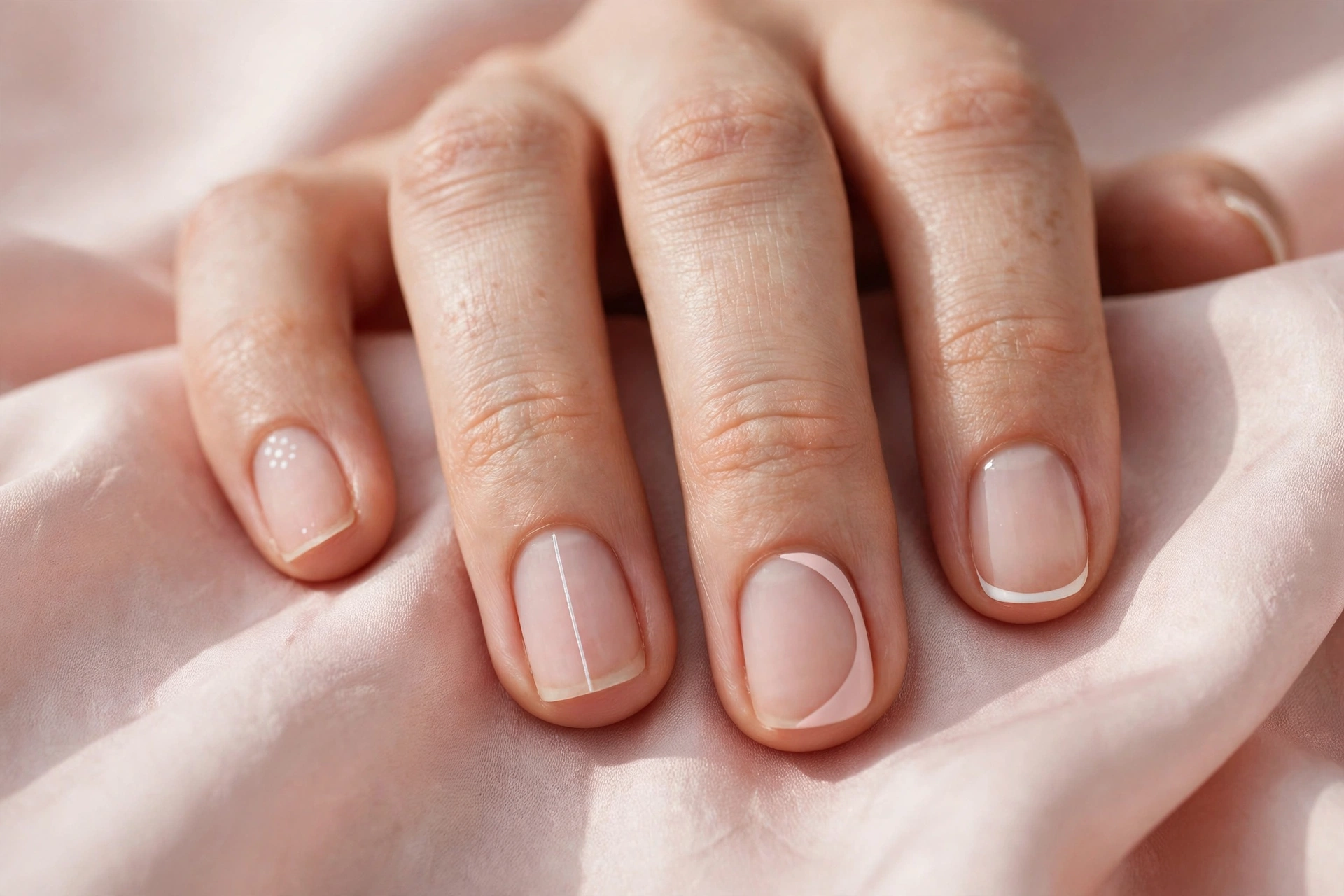

Yes, short nails can look polished, elegant, colorful, and creative, and they are an excellent canvas for nail art. The most flattering designs often use thin lines, small accents, negative space, nude bases, or delicate French tips rather than oversized decorations. This October 2026 guide covers simple short nail designs, cute ideas, techniques for very short nails, salon tips, and practical care for natural nails.
Can you do nail art on short nails?
Absolutely. Simple short nail designs work beautifully on nails with little or no free edge because many patterns need very little space. Tiny dots, a narrow stripe, a small heart, or a contrasting accent can create a finished look without covering the entire nail.
Short nails generally have a free edge that reaches the fingertip or extends only slightly beyond it. The nail bed is the part of the nail attached to the underlying tissue, so the visible length of the nail bed can affect how much room a design appears to have.
If you are searching for nail designs short enough for daily work, school, sports, or hands-on tasks, start with these options:
- Thin vertical lines: Draw the eye along the length of the nail.
- Negative space: Leave small areas of the natural nail visible between painted sections.
- Tiny dots: Add one dot near the cuticle area or a neat row of small dots.
- Mini French tips: Use a narrow line at the free edge instead of a thick tip.
- One accent nail: Keep most nails a solid color and decorate one or two.
- Nude or sheer bases: Let the natural nail show through for a light, understated look.
Short nails do not need to imitate long nails to look good. A small design that fits the available space often looks more balanced than a detailed pattern squeezed onto every finger.
Why short nails are a great choice
Short natural nails can be practical, comfortable, and stylish. They may be easier to manage for people who type frequently, work with their hands, play sports, or prefer a manicure that does not catch on clothing. Keeping nails short can also reduce the amount of free edge that gets knocked or bent, although nail breakage still depends on the person’s nails and daily activities.
If you are thinking, “I have small nails,” you are not alone. Short nail beds, wide nail beds, and naturally small nail plates are all normal variations. Your nails do not need to reach a particular length to suit nail art.
Short nail beds versus long nail beds
The nail bed is the attached portion beneath the nail plate; the free edge is the part that extends beyond the fingertip. People with shorter or wider nail beds may feel that their nails look compact, even when they have a little free edge.
Long nail beds versus short ones are not a measure of nail quality. They simply provide different proportions to work with. Vertical details, narrow French tips, and small accents can complement a compact nail, while broad designs may take up most of the visible surface.
Short nails can suit many styles
- Low-maintenance: Shorter nails can be easier to keep at a consistent length.
- Work-friendly: A short manicure may suit jobs or activities where long nails are impractical.
- Easy to experiment with: You can test a new color or pattern without committing to elaborate artwork.
- Naturally stylish: A clean, glossy finish or sheer color can look complete without nail art.
If your nails are short because of biting, breakage, work rules, or personal preference, there is no need to apologize for their length. The aim is to find designs that work with your nails as they are.
For shaping guidance, use the site’s dedicated nail-shapes guide. This article focuses on designs for short natural nails rather than a full shape tutorial.
The best designs for short nails
The best designs for short nails usually have clear details, enough open space, and proportions that suit a smaller canvas. You can keep the entire manicure understated or use one brighter accent to make it stand out.
| Design | Why it flatters short nails | Difficulty | Best finish |
|---|---|---|---|
| Sheer pink or nude | Keeps the look light and uncluttered | Beginner | Glossy |
| Thin mini French tip | Adds a neat outline without taking up much space | Easy to medium | Glossy |
| Tiny dots | Creates detail without crowding the nail | Beginner | Glossy |
| Vertical stripes | Draws the eye along the nail’s length | Medium | Glossy or matte |
| Negative-space curves | Leaves open areas that make the design feel lighter | Easy to medium | Glossy |
| Small floral accent | Adds a decorative detail to one or two nails | Medium | Glossy |
| Soft sponge ombre | Blends colors without a hard dividing line | Medium | Glossy |
| Vertical chrome line | Adds reflection without covering the whole nail | Easy to medium | Glossy |
| Two-tone color block | Adds contrast with a simple, controlled pattern | Easy to medium | Glossy or matte |
| Tiny heart or star | Gives a cute look while keeping the design small | Beginner to medium | Glossy |
Simple short nail designs to try
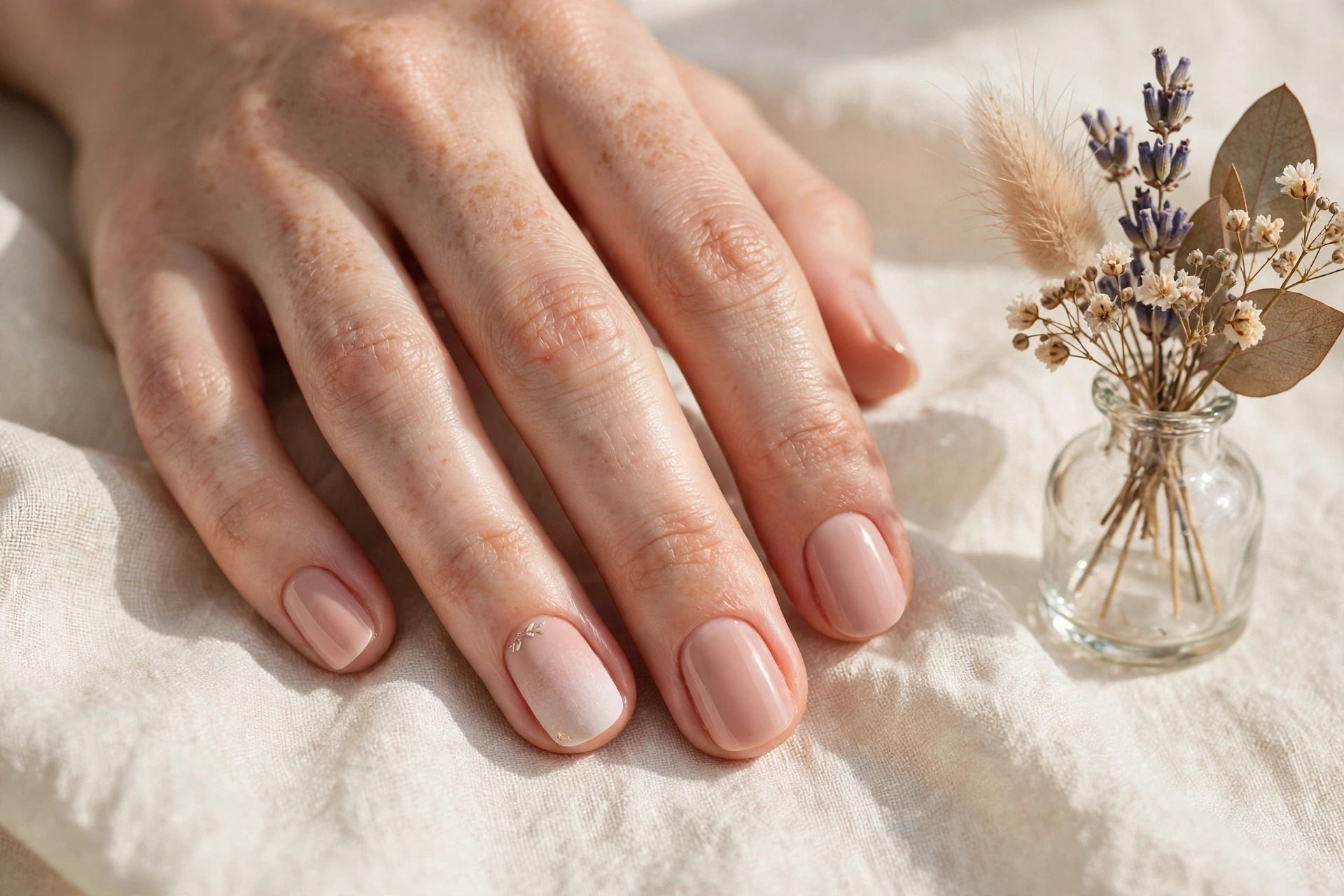
- Sheer pink with tiny dots — Use a sheer pink or beige base, then add one or two dots near the cuticle area. This is a simple option when you want a little detail without a busy pattern.
- Mini French tips — Paint a thin line at the free edge. A soft white tip looks classic, while a muted color gives the same idea a modern twist. Keep the line narrow so it does not dominate the nail.
- One vertical accent — Draw a thin line down the center or slightly off-center. You can use a contrasting polish or a nail-safe chrome product designed for this purpose.
- Negative-space curves — Paint a curved line or small shape while leaving part of the nail unpainted. This creates a light design that works especially well on very short nails.
- One decorated nail — Choose one accent nail for a heart, star, small flower, or geometric mark. Keep the other nails in a coordinated solid color.
- Two-color tips — Instead of a classic white tip, use two narrow colors along the free edge. Choose shades with enough contrast to remain visible at a small scale.
- Soft ombre — Blend two related colors with a sponge, keeping the transition subtle. A lighter shade toward the tip can create a gentle, elongated effect.
- Fine metallic detail — Add one narrow metallic line or a small chrome accent. The detail can catch the light without requiring a full chrome manicure.
These ideas work across many manicure preferences, from cute nail designs for short nails to classy short nails with restrained details. The important thing is to keep the pattern proportional to the space available.
Simple everyday short nail looks
Everyday manicures do not need complex art to look intentional. A neat base color, even application, and a suitable finish can be enough. If you want manicure ideas for short nails that are easy to repeat at home, start with designs that use one main color and one small detail.
One-color and sheer manicures
A single shade is one of the easiest ways to make short natural nails look finished. Try sheer pink, beige, soft brown, muted red, or a deeper solid color depending on your preferences and routine.
For a little variation, use a glossy finish on most nails and a compatible matte finish on one accent nail. If you want to explore polish formulas and finishes in more detail, the site’s nail-polish guide covers that topic separately.
Neutral nails with a small accent
A neutral base can work with tiny dots, a narrow line, or one simple motif. Choose a detail color that contrasts enough to remain visible, especially if your nails are very short.
Neutral manicures can be understated without being plain. A fine metallic line, a small heart, or one accent nail can add interest while keeping the overall design suitable for daily wear.
Mini French manicure
A French manicure can work on short nails when the tip is kept thin and the curve follows the nail’s free edge. If you have very little free edge, try a micro-French line rather than a thick white band.
Detailed French-tip variations belong in the dedicated French manicure guide. For this article, the key is scale: a narrow tip often looks more balanced on a short nail than a broad one.
Short natural nails with a soft wash of color
A sheer polish lets some of the natural nail show through and can be an easy option between more decorative manicures. Apply thin coats and allow them to dry properly. If you prefer a completely bare look, clean, gently filed nails are also a valid choice.
Cute & fun ideas for short nails
Cute nail designs short enough for a small nail plate can still have plenty of personality. The trick is to use smaller motifs, repeat a simple pattern, or place the most detailed artwork on one or two fingers.
Tiny hearts, stars, and dots
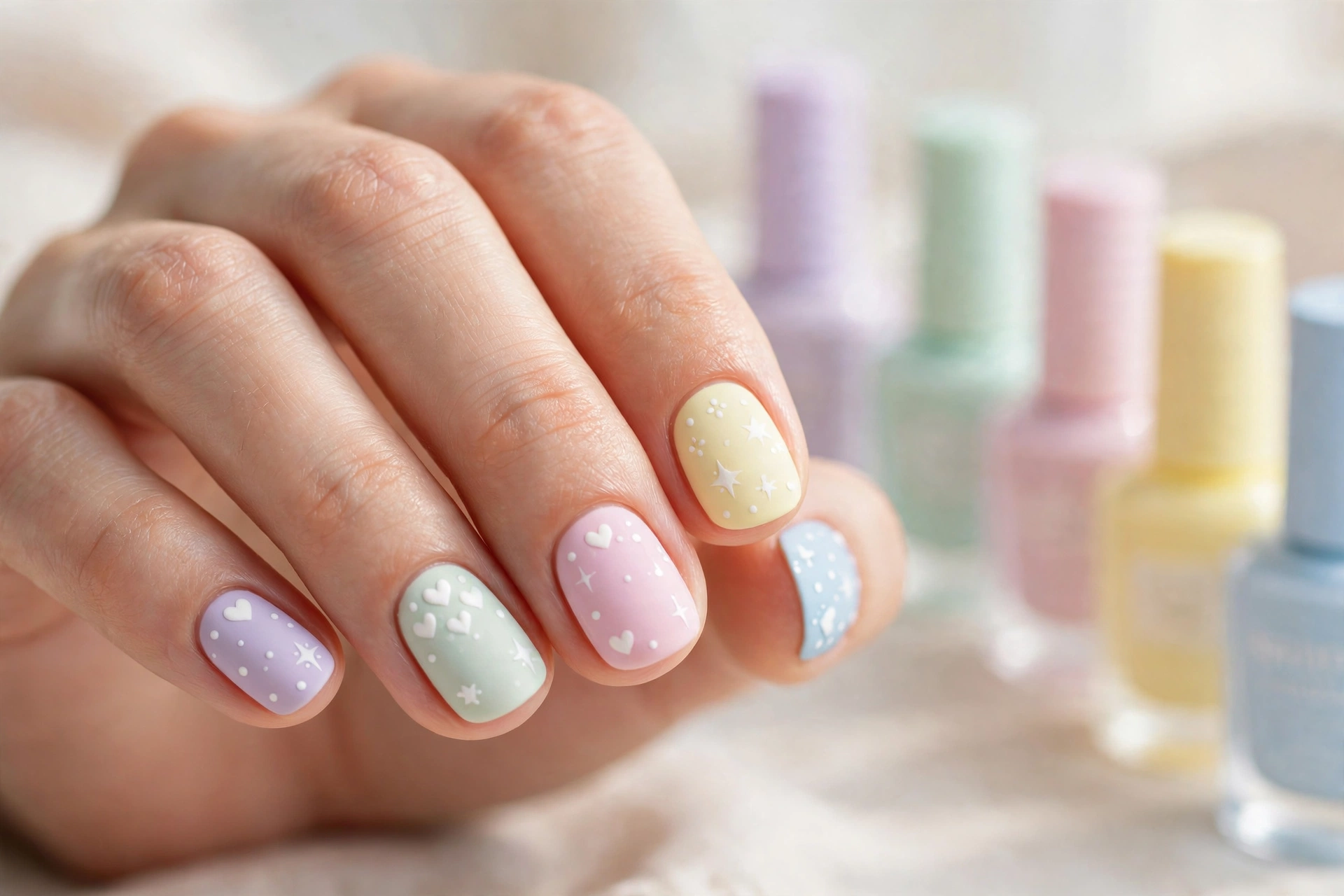
Small hearts, stars, and dots are easy to adapt to different colors. Paint one tiny heart on each accent nail, scatter a few dots over a neutral base, or use small stars on two fingers while leaving the others plain.
For cute and easy nail art for short nails, choose one motif and repeat it consistently. It is usually easier to make a small design look neat than to fit several unrelated illustrations onto a limited surface.
Short pastel nails
Pastel shades can create a soft, playful manicure. Try alternating two pastel colors, adding tiny white dots, or painting a small contrasting star on one nail. If you like a coordinated set, repeat the same motif across the fingers rather than adding a different large illustration to each one.
The dedicated pastel guide covers more color combinations and styles, so this article keeps the focus on designs that fit short nails.
Mix-and-match accents
You can use a different design on each nail without making the set look chaotic. Keep the base color consistent, repeat a small group of colors, or use the same motif in different placements.
For example:
- One nail with dots.
- One with a thin stripe.
- One with a tiny heart.
- Two nails in a plain coordinating color.
This gives you a playful manicure without requiring detailed artwork on every finger.
Small-scale “junk nail” style
The junk-nail look mixes several colors, patterns, and decorative details across a manicure. On short nails, simplify it by choosing two or three colors and using small-scale marks, such as dots, stars, short lines, or tiny decals.
Avoid crowding every nail with thick layers of decoration. A few varied details can create the mixed look while keeping the manicure comfortable and visually balanced.
Cute nail designs for short nails do not have to be pastel or delicate, either. Bright colors, dark bases, and graphic marks can all work when the elements are scaled to the nail.
Short nail art techniques that actually work
Short nail art designs are easier to control when you use small tools and keep each layer thin. You do not need to master every nail-art technique; choose one method that matches the look you want and practice it before adding more detail.
Dotting and tiny details
Use a dotting tool to place small dots, create a simple flower, or make a short trail of dots. Start with a little polish on the tool and press lightly. Large blobs can spread across a short nail, so reload the tool with less polish when needed.
Thin striping and negative space
A striping brush can create vertical lines, narrow curves, and small geometric shapes. Rest your hand on a stable surface, move the brush in one controlled stroke, and let the line dry before adding another.
Negative space means leaving parts of the natural nail visible between painted areas. Try a thin curve, a side stripe, or two small shapes separated by an unpainted gap. This is particularly useful for nail art on small nails because the design does not need to cover the whole surface.
Mini French tips
Apply a thin contrasting line at the free edge, using a fine brush or a suitable French-tip tool. Keep the line narrow and follow the natural edge instead of painting a thick band. If the free edge is extremely short, a tiny accent near the tip may be easier than a traditional French line.
Sponge ombre for short nails
Ombre for short nails works best when the colors blend without creating a thick, uneven layer. Apply thin stripes of two colors to a makeup sponge, then dab lightly over the nail. Repeat in thin passes as needed, allowing the design to settle before applying top coat.
For short nail ombre, related shades can be easier to blend than strongly contrasting colors. Very short ombre nails can still show a soft transition, although the gradient will naturally have less space to develop.
What to avoid when space is limited
Oversized 3D charms can overwhelm short nails, catch on fabric, and make daily tasks awkward. Thick horizontal stripes may also visually shorten the nail because they divide the available space across its width. Neither is a strict rule, but smaller details are often easier to balance.
For more nail-art style families and advanced techniques, use the site’s dedicated nail-art guide. Here, the focus stays on methods that are practical for short natural nails.
How to make short nails look longer
No design changes the actual length of the nail bed, but some patterns can create a visual effect that makes short nails appear more elongated. Vertical details, sheer nude colors, and narrow tips can help guide the eye along the length of the nail.
Choose a close-to-skin-tone base
A sheer nude or neutral shade that complements your skin tone can create a continuous-looking surface. It does not need to match your skin exactly. Choose a color you enjoy and apply it evenly rather than relying on a shade to change the nail’s natural proportions.
Use vertical details and open space
Thin vertical lines can draw attention from the cuticle toward the free edge. Negative-space designs can also keep the surface from feeling crowded. A narrow accent down the center or near one side may be enough.
Keep the free edge even
File nails gently in one direction rather than sawing back and forth. Keep a little free edge so the fingertip is not left sore, and avoid over-filing the sides. Short nails can look neat without being filed into a sharply pointed shape.
For a broader explanation of nail shapes, refer to the site’s dedicated nail-shape guide rather than changing your natural nails solely to create an illusion of length.
Care for the cuticle area
The cuticle area frames the visible nail plate. You can soften the surrounding skin with cuticle oil and gently push back the cuticle when appropriate, but do not cut living cuticle tissue. Avoid aggressive buffing, which can thin the nail plate.
These steps can make a manicure look tidier, but there is no need to chase a particular nail-bed appearance. Short and wide nail beds are normal, and a well-scaled design can suit them as they are.
Colors that flatter short nails
There is no single color that suits every short nail. Your preferred shades, skin tone, wardrobe, and the occasion all matter. The easiest way to choose is to decide whether you want the manicure to look soft, bright, dark, or reflective.
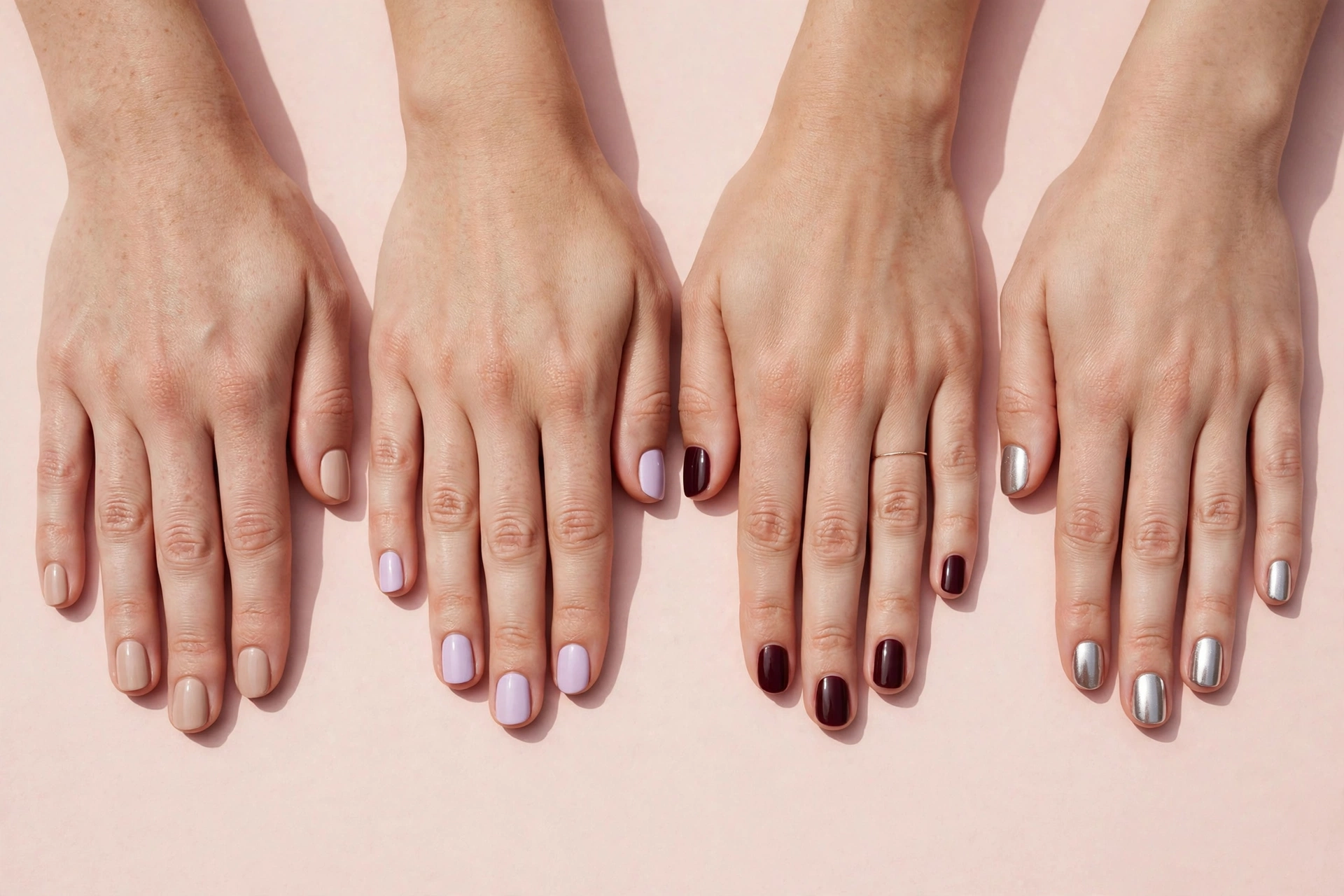
Nude and neutral shades
Beige, taupe, soft pink, and sheer milky shades are useful when you want a low-key manicure. A nude base with a tiny accent can look polished without making the design feel crowded.
Pastels and bright colors
Short pastel nails can use alternating colors, small dots, or tiny stars. Brighter shades also work well on short nails; try a solid bright color or use two shades in simple blocks. If you use several colors, repeat one or two shades to make the set feel connected.
Dark colors
Deep red, burgundy, navy, forest green, and black can create a striking look on short nails. Keep the polish application neat around the edges, because darker shades may make uneven borders more noticeable.
Chrome and reflective details
Chrome short nails do not have to mean a full reflective manicure. A narrow vertical accent, a small metallic shape, or one chrome accent nail can add shine while keeping the design restrained. Neutral chrome nails short in length can look subtle when the reflective effect is limited to a small area.
Use chrome powder only with the nail products and application method it is intended for. Follow the product directions, including any curing requirements. The dedicated chrome and glazed guide covers these finishes in greater detail, while the color-theory guide explores shade pairing separately.
Short nails at the salon: what to ask for
You can get a polished salon manicure without adding length or choosing elaborate art. Tell the nail technician that you want to keep your natural nails short and that you prefer designs scaled to the available nail surface.
Try asking for:
- “Please keep my nails short and natural.”
- “I would like a neat, even free edge.”
- “Can we keep the nail art small and simple?”
- “Please avoid over-filing my natural nail plate.”
- “I prefer a thin tip or a small accent rather than a large decoration.”
A natural squoval or round shape may be practical for many short nails, but the best option depends on your nail and preference. The site’s nail-shapes guide covers shape choices in more detail.
What does a short-nail manicure cost?
In the US, a basic manicure commonly costs around $20–$40, with prices varying by location and salon. Simple nail-art add-ons may cost a few dollars per nail; detailed art, multiple colors, or raised decorations can increase the total. Ask for the full price before the service begins.
Regular polish is generally easier to remove at home, while gel polish uses a different application and removal process. The dedicated gel-nail guide covers that system in more detail.
Speak up about over-filing
You can ask the technician to stop if filing feels painful or your nails are being thinned more than you expected. Filing should shape the free edge, not leave the nail plate sore or excessively thin. It is reasonable to request a gentler approach or to skip a step you are uncomfortable with.
If you are considering short acrylic designs, note that acrylic enhancements are a separate service from the natural-nail focus of this article. Likewise, press-on sets have their own fit and removal considerations, and nail glue should only be intended for nail use.
Very short nails & small nail beds
Very short nails can still look neat and expressive. If you have bitten your nails, have a small nail plate, or prefer almost no free edge, begin with designs that need only a little space: dots, a single line, negative space, or one small accent.
Designs for bitten nails
If your nails are bitten or uneven, gently file the free edges until they feel smooth and consistent. Do not file aggressively or try to create length by thinning the sides. Keep the design simple while the nails are short.
Good options include:
- One dot on each nail.
- A tiny design on one accent nail.
- A sheer base with a small contrasting line.
- A simple color on every nail.
- Negative-space details that use the natural nail as part of the design.
Some people choose bitter-tasting polish as a personal reminder not to bite their nails; it is optional and not a treatment. If you have persistent nail damage or suspect an infection, consult a dermatologist rather than trying to diagnose the cause yourself.
Ideas for wide or small nail beds
A wide nail bed can make the nail look shorter or broader, even when the free edge is visible. Vertical lines, small motifs, and narrow French tips can create a more elongated visual effect. These are styling options, not corrections for a problem.
If your nails are very short, avoid packing several detailed images onto each one. One clean detail can be easier to see and maintain than a crowded design. A little free edge, a neat outline, and a color you enjoy are enough for a finished manicure.
Simple care for short natural nails
File in one direction, avoid over-buffing, and use cuticle oil to keep the surrounding skin comfortable. If nails peel, a nail strengthener intended for that purpose may be an option; follow its directions and stop if irritation develops. Use acetone or non-acetone remover according to the polish product and removal instructions.
Never peel polish or nail art off, because doing so can lift layers of the natural nail plate. Patch-test new products according to their directions. For suspected nail fungus or infection, see a dermatologist; do not try to diagnose it from appearance alone. A fuller care routine belongs in the site’s dedicated nail-care guide.
Frequently asked questions
Can short nails look elegant?
Yes. Short elegant nails can feature sheer pink, neutral polish, a thin French tip, a fine metallic line, or a neat glossy finish. Classy short nails depend more on the design and application than on length.
What is the best nail shape for short nails?
The best shape depends on your natural nail and personal preference. A short, softly rounded or squoval edge may be practical for many people, but this article does not cover a full shape guide; see the dedicated nail-shapes page for more detail.
Do press-on nails work on short nails?
Yes, some press-on nails can fit short natural nails when the size and shape are suitable. Choose a product that fits each nail without forcing it, and follow its application and removal instructions. Do not rip or pry press-ons off.
How do I make my short nails look longer?
Try a sheer nude base, thin vertical lines, negative space, or a narrow French tip. These details can create a visual effect of length, but they do not change the actual size of your nail bed.
Will nail art chip faster on short nails?
Not necessarily. Wear depends on the polish, application, drying time, daily activities, and how the manicure is removed. Regular-polish art often lasts around 2–7 days, although individual results vary.
Can I wear chrome or ombre on short nails?
Yes. A small chrome accent or a soft ombre gradient can work on short nails. Keep the design thin and proportional to the available space; the dedicated chrome and ombre guides cover those techniques in more detail.
Short nails offer plenty of room for personal style, from sheer everyday colors to playful dots, mini French tips, and reflective accents. Choose simple short nail designs that suit your natural nail length, use gentle techniques, and let the details work with the space you have rather than trying to disguise it.
Last reviewed: October 2026 — Editorial Team, Polish Haven