
Gel nail colors combine a glossy finish with color that hardens under a compatible UV/LED lamp, typically lasting around two to three weeks with proper preparation. To choose the right shade, consider your undertone, preferred finish and occasion, then check the formula, curing requirements and ingredient information before buying. This guide explains the differences so you can choose confidently for home or salon use.
What is gel polish?
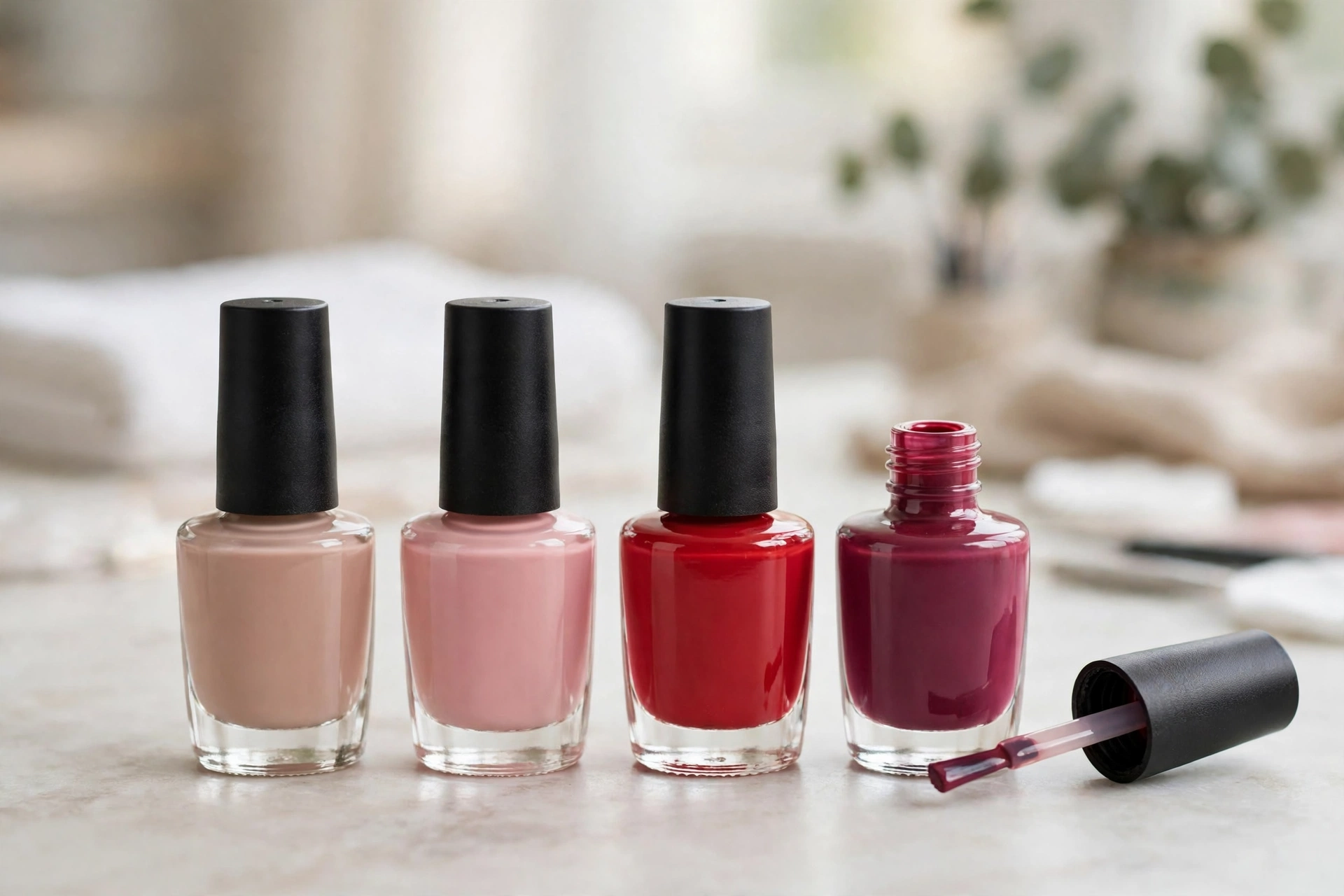
Gel polish is an acrylate-based nail coating that hardens through curing under a compatible UV or LED lamp. Unlike regular nail lacquer, which dries in the air, gel polish requires the specified light-curing process to form its finished coating.
A typical three-step system includes a base coat, a color coat and a top coat. Each layer must be applied thinly and cured according to the product instructions. Thick layers can cure inadequately, even when the surface appears hard.
When comparing gel polish for nails, check whether the formula is a soak-off gel, a one-step product or a different type of nail coating. These formats have different application and removal requirements.
The phrase nail gel polish generally refers to the same broad product category, but not every product marketed as gel is a lamp-cured formula. Always check the packaging rather than relying on the name alone.
The main types of gel polish
Three common options serve different needs: traditional soft gel, one-step gel and air-dry gel-effect polish.
| Feature | Three-step soft gel | One-step gel | Gel-effect polish |
|---|---|---|---|
| Curing | UV/LED lamp required | UV/LED lamp required | Air-dries |
| Typical wear | Around 2–3 weeks | Around 7–10 days | Around 5–7 days |
| Removal | Acetone soak, as directed | Depends on the formula | Regular lacquer remover, as directed |
| Skill level | Moderate | Moderate | Beginner-friendly |
| Best for | Longer-lasting color | Fewer application steps | Glossy look without a lamp |
Soft gel is a flexible, lamp-cured coating that can generally be removed by soaking in acetone according to the manufacturer's directions. It is a common choice for people who want longer-lasting color without using a hard-gel sculpting system.
One-step gel
One-step gel combines the functions of a base, color and top coat. It simplifies the routine but typically wears for about seven to ten days rather than the two to three weeks expected from a properly applied three-step system.
Gel-effect and no-light products
No-light gel-effect polish is regular, air-dry lacquer designed to create a gel-like shine. It is not true lamp-cured gel polish, and it typically wears for around five to seven days.
If you're considering nail polish gel products, this distinction matters: the finish may look similar, but the chemistry, curing process and removal method are different.
How to choose your gel nail color
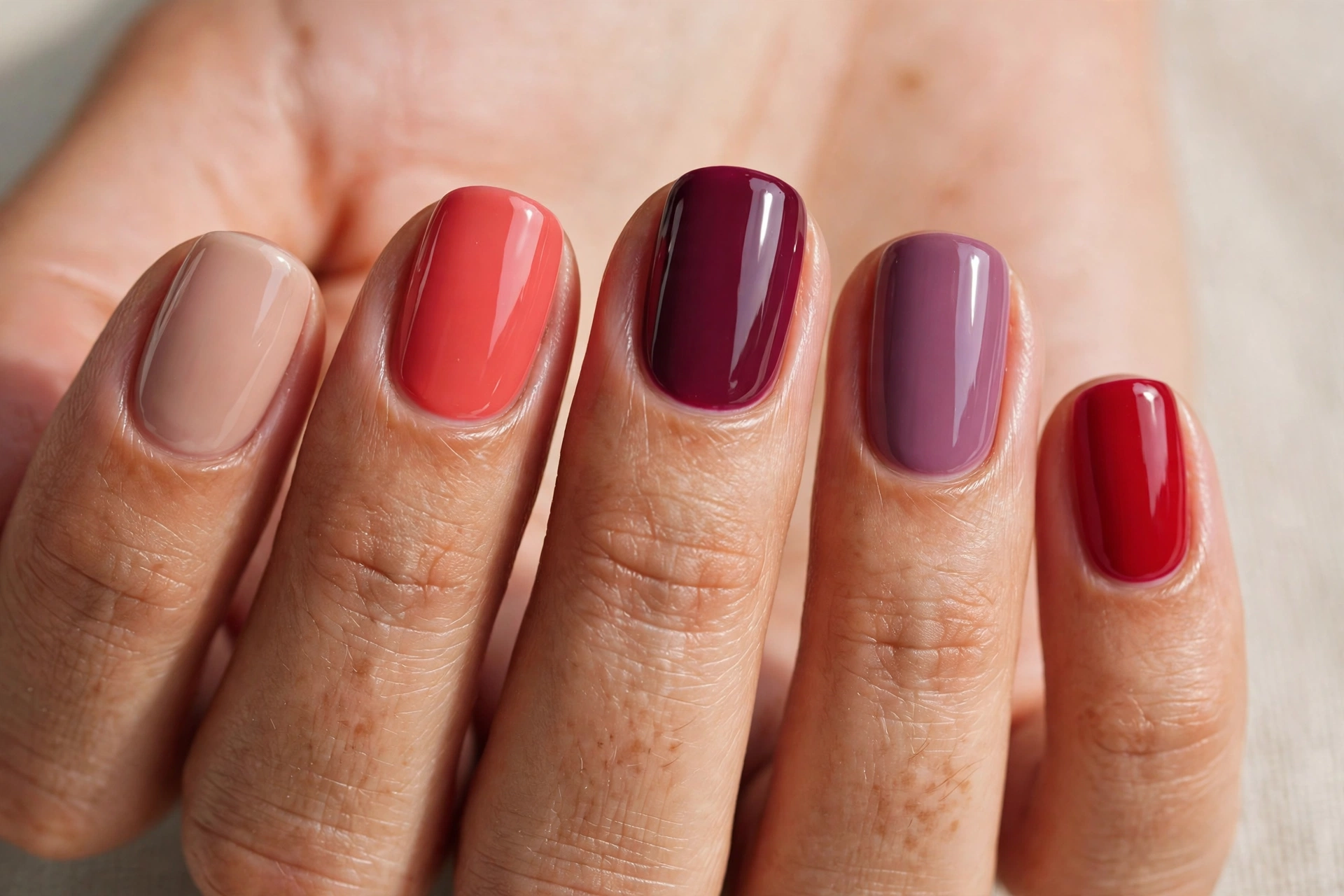
The most useful way to choose a shade is to consider undertone, finish and the setting in which you plan to wear it. Trends can inspire your choice, but a shade that suits your personal style will remain useful beyond a single season.
Choose by undertone
- Warm undertones: Try peach, coral, warm beige, terracotta or creamy red.
- Cool undertones: Consider blue-red, berry, mauve, cool pink or blue-based purple.
- Neutral undertones: Explore rose, taupe, balanced nude shades and classic red.
These are starting points, not strict rules. Skin tone, personal preference and the color's opacity all influence how a shade appears.
Choose by finish
- Crème: Smooth, even color with no visible sparkle.
- Sheer or jelly: Translucent color that allows some of the natural nail to show through.
- Shimmer: Fine reflective particles that create a subtle glow.
- Glitter: Visible reflective particles for a more textured appearance.
- Chrome: A reflective metallic effect, often created with a separate powder system.
- Cat-eye: A magnetic effect produced with a compatible magnetic gel and technique.
When comparing gel nail polish colors, decide whether you want full coverage or a translucent result. A highly pigmented shade may cover in fewer coats, but every layer still needs to be thin enough to cure properly.
The range of gel polish colors can include everyday neutrals, bold brights, deep seasonal shades and reflective finishes. For 2026, choose colors based on the look you enjoy rather than treating any trend as a requirement.
Clear and sheer gel polish: the barely-there look
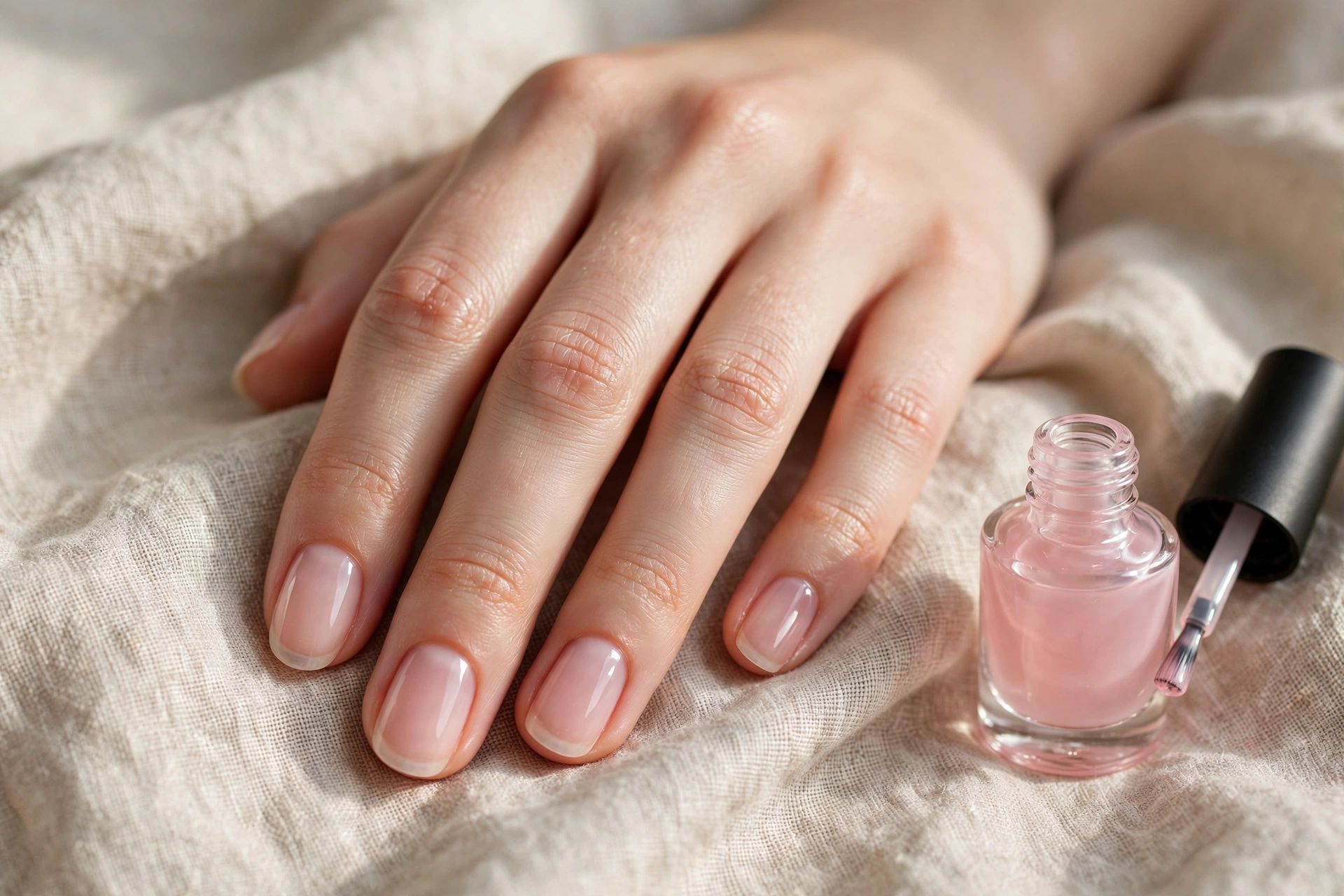
Sheer colors are useful when you want a polished appearance without full, opaque coverage. Popular choices include milky white, translucent beige, soft pink and neutral rose.
Transparent pink gel polish is especially useful for a subtle finish because it adds a wash of color without completely hiding the natural nail. Depending on its formula, one thin coat may look nearly transparent, while additional coats build more color.
When choosing clear gel nail polish, check whether it is intended as a clear color coat, a base coat or a top coat. These products serve different purposes even if they appear similar in the bottle.
For natural-looking results:
- Choose a sheer shade close to your preferred nude or pink tone.
- Use thin coats to build coverage gradually.
- Select a milky or jelly finish if you want some translucency.
- Avoid treating a clear top coat as a substitute for a colored polish.
Short nails can look neat with sheer pink, milky neutrals, taupe or a single crème shade. The best option depends on your preferred style rather than nail length alone.
Vegan gel nail polish: what the label really means
Vegan gel nail polish is marketed as a formula that contains no animal-derived ingredients. Cruelty-free is a separate claim that generally means the brand says it does not test the product or its ingredients on animals under its stated policy.
These claims are not interchangeable, and neither automatically proves that a product is hypoallergenic, safer or more environmentally sustainable. Consumers should review the brand's definitions and supporting disclosures.
The term vegan gel nail polish should therefore be evaluated alongside the ingredient list and product instructions, not as a stand-alone quality rating.
A vegan formula may still contain acrylates and other ingredients that can cause reactions in susceptible people. If ingredient transparency matters to you, look for clear labeling and ask the manufacturer about ingredients or testing policies that are not explained on the package.
Gel polish brands: how to judge quality
A reliable buying decision starts with the product's characteristics rather than a brand ranking. The same label can cover different formulas, finishes and application systems, so evaluate the specific product you intend to use.
Look for these quality signals:
- Pigmentation and opacity: The product should provide the coverage described on its label without requiring unnecessarily thick layers.
- Consistency: The formula should spread evenly and be manageable for your skill level.
- Self-leveling: Some formulas settle into a smoother surface when applied correctly; this does not eliminate the need for careful application.
- Curing instructions: The packaging should specify the compatible lamp and curing directions.
- Ingredient and warning information: Labels should make it possible to understand the intended use and relevant precautions.
- Removal guidance: Clear instructions help you choose a formula that fits your preferred maintenance routine.
When researching gel polish brands, compare these characteristics instead of relying on popularity alone. The phrase gel nail polish brands covers products that can differ considerably in formula and intended use.
Gelish, CND Shellac, Akzentz Luxio and 7 Star are examples of names consumers may encounter in the nail-color market; this is a neutral mention, not a product ranking or endorsement.
A good brand gel nail polish option should have clear directions and a formula compatible with your equipment and intended application. The same checks are useful when assessing salon gel nail polish, especially if you want to understand what will be applied and how it will be removed.
Gel polish at home vs the salon
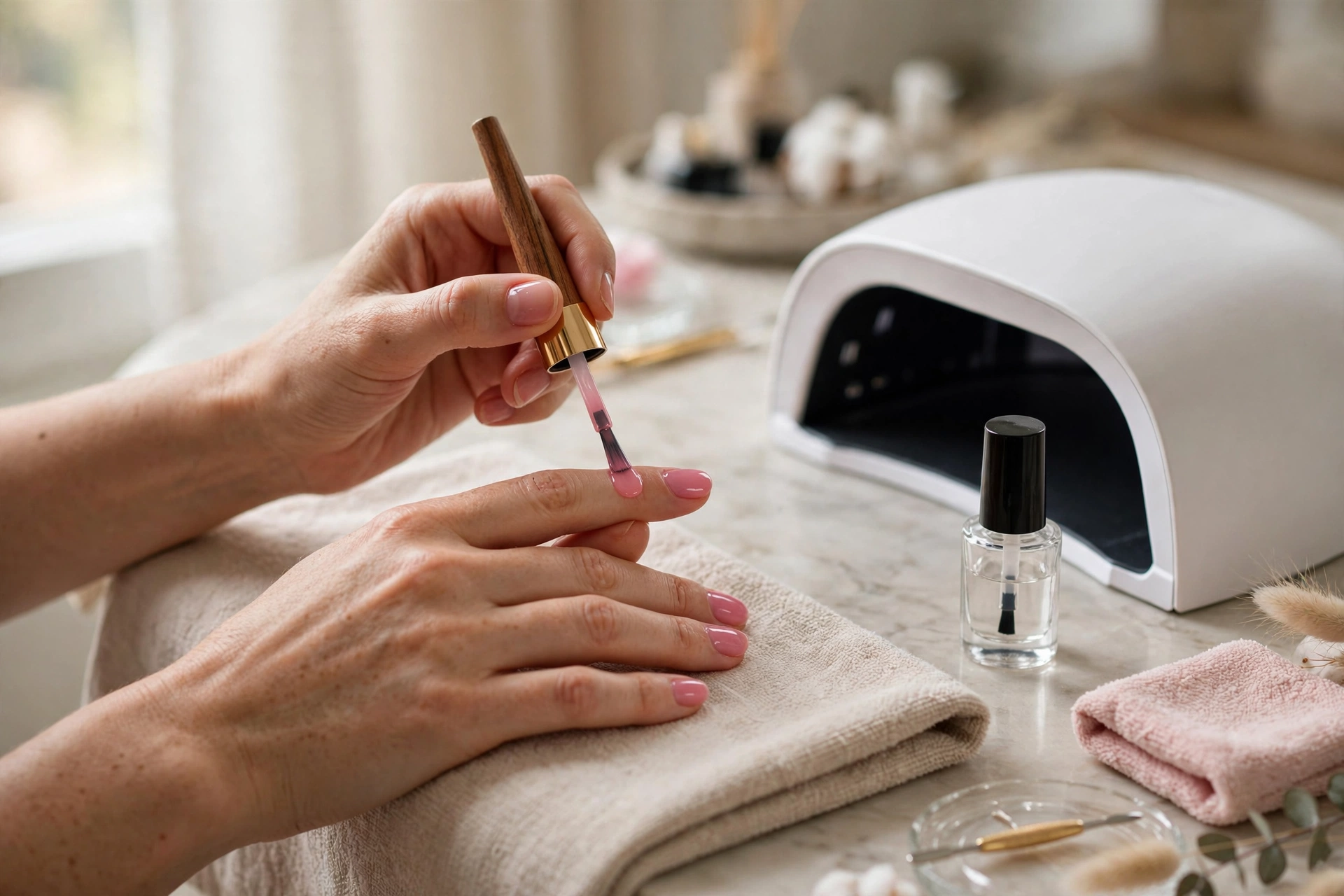
At-home gel polish can suit people who are comfortable handling the products, following curing instructions and removing the coating carefully. A suitable lamp, compatible polish, appropriate nail preparation and controlled application are essential.
For gel polish natural nails, focus on gentle preparation and avoid aggressively filing the nail plate. Natural nails do not need to be heavily thinned for a gel coating to adhere.
Before buying gel polish for nails, confirm that the lamp is compatible with the formula. A lamp that appears to harden the surface does not necessarily mean the coating has cured adequately throughout.
A salon may be preferable if you're unfamiliar with gel application, unsure about lamp compatibility or uncomfortable with removal. Ask the technician about product ingredients, sanitation practices, curing and whether the chosen coating is soak-off gel or a harder sculpting product.
The site's gel nails guide covers the wider manicure routine; this article focuses on color selection and product types.
Gel paint for nail art: when to use it
Gel paint is a more concentrated product used for detailed lines, fine patterns and decorative accents. Depending on its formulation, it may have a thicker consistency or stronger pigmentation than a standard bottled color coat.
Choose a gel paint when you need controlled detail or a highly pigmented line rather than a full-nail wash of color. It must be used and cured according to its specific instructions.
Gel polish nail art can also be created with regular color coats, but intricate work may be easier with a product designed for detail. Keep each layer appropriately thin, and never allow uncured product to touch the surrounding skin.
The site's nail art designs guide covers design inspiration separately, so this section stays focused on product choice and technique.
How long does gel polish last?
A properly prepared, correctly cured three-step soft-gel manicure typically lasts around two to three weeks. One-step gel usually lasts around seven to ten days, while air-dry gel-effect lacquer generally wears for around five to seven days.
Wear time can be shortened by:
- Applying layers that are too thick.
- Allowing polish to flood the cuticle or surrounding skin.
- Using an incompatible lamp or incorrect curing time.
- Exposing the coating to repeated impact and everyday wear.
- Applying product to nails that are oily, damp or poorly prepared.
Free-edge capping—applying product carefully over the tip of the nail when the system calls for it—can help reduce premature edge wear. It does not guarantee a particular lifespan.
If you want the longest lasting gel polish, prioritize correct preparation, compatible products, thin layers and complete curing rather than assuming that a more expensive bottle will last longer.
Never peel or pick off gel polish. Forceful removal can lift natural nail layers and contribute to splitting or brittleness.
Gel polish safety: allergies, lamps and removal
Gel polish requires care because uncured acrylate-based products can cause allergic sensitization when they contact skin. HEMA, or 2-hydroxyethyl methacrylate, is one ingredient associated with nail-product allergies; it is not the only possible trigger.
Follow these precautions:
- Read the product instructions and use a compatible UV/LED lamp.
- Apply thin layers and cure each layer for the specified time.
- Keep uncured gel off the cuticles and surrounding skin.
- Work in a well-ventilated space and avoid eye contact.
- Patch-test new products only as directed by the manufacturer, understanding that this cannot guarantee you will not develop an allergy.
- Remove soak-off gel with the recommended acetone method. Never peel or force it off.
The American Academy of Dermatology recommends avoiding picking at gel polish and using appropriate removal methods to reduce nail damage.
Stop using the product if you develop redness, itching or swelling. If symptoms persist, or you experience painful lifting or suspect a nail infection or fungus, see a dermatologist rather than attempting to diagnose the problem yourself.
How much does gel polish cost (and where to buy it)
In the United States, DIY gel polish bottles typically cost around $20, while a salon gel manicure commonly costs approximately $60 or more. Prices vary with location, service, product size and additional treatments.
When comparing gel polish colors, consider the total cost of the system, including a compatible lamp if needed, base and top coats, and suitable removal supplies. A lower bottle price may not reflect the full cost of use.
You can look for products through reputable beauty retailers, salon suppliers and established online sellers. Check the label, ingredient information, lamp compatibility and return policy before purchasing.
Frequently asked questions
What is the difference between gel polish and regular nail polish?
Gel polish hardens under a compatible UV/LED lamp, while regular nail polish dries in the air. Gel typically lasts around two to three weeks with proper preparation, compared with the generally shorter wear of ordinary lacquer. Gel also needs a different removal process, so it is important to understand the formula before applying it.
Does gel polish need a UV lamp?
True gel polish requires a compatible UV/LED lamp to cure. Follow the product's lamp compatibility and curing instructions. Gel-effect lacquer that dries in the air does not require a lamp, but it is not the same as true gel polish.
Can you use gel polish on natural nails?
Yes. Gel polish can be applied to natural nails when the product is used as directed. Prepare gently, keep uncured product off your skin, apply thin layers and cure fully. Avoid covering damaged or painful nails, and remove the coating without peeling it off.
Can you paint Gel-X nails with gel polish?
Gel polish can generally be applied over compatible, properly prepared Gel-X-style extensions, provided the extension and polish manufacturers permit it. If you mean painting the tips before applying them, check the extension system's instructions first because pre-painting can affect fit, adhesion or curing access.
Is gel polish vegan?
Some gel polishes are marketed as vegan, meaning the brand claims they contain no animal-derived ingredients. Vegan and cruelty-free are separate claims, and neither means the product is automatically hypoallergenic. Check the manufacturer's ingredient disclosures and policy statements.
How much does gel polish cost?
DIY bottles typically cost around $20 in the United States. A salon gel manicure usually costs around $60 or more, depending on the location and service. At-home users should also account for the lamp, compatible base and top coats, and removal supplies.
Last reviewed: October 2026 — Editorial Team, Polish Haven